Great coverage on freep.com regarding the domestic auto industry and the bridge loans. I hope America reads this, this, this, and this.
"And indeed, we now know what happens when a society runs its industrial systems not to manufacture products but to manufacture cash.
You end up with neither."
Wednesday, December 03, 2008
Monday, November 17, 2008
Please do your homework, Mr. Friedman
Dear Mr. Friedman,
First of all, I'm from Flint, Michigan, and like so many others from Flint, I come from a GM family. My Grandma worked there, my Dad worked there, most of my friends' parents have worked or work there, and I've worked there too. So though I won't claim that I have an unbiased opinion, I will point out that I'll be the first one to talk intelligently about the domestic auto industry's problems and I try to avoid defending the Big Three if they don't deserve it. They're far from innocent. I will, however, defend Detroit when the industry is written off as "un-inovative" and a column suggests that its far behind/more guilty than any of its foreign rivals.
In your most recent column, "How to Fix a Flat," you suggested that the most recent $25 billion in loan guarantees to the domestic auto industry was a U.S. taxpayer bribe to innovate. In fact, in 2007 GM spent only slightly less than Toyota on research and development and was the second highest spender in the world (Ford was 6th). As a percentage of sales, GM and Ford both outspent Toyota, and since 2006 GM has increased its research and development budget by almost 23%.
I think we can agree that the most radical innovations in the car industry over the past several years have been the emergence of hybrid engines and the improvements in fuel efficiency. Therefore, I'd like to point out that though Detroit came to the hybrid game a little late, GM and Ford now offer more hybrid models than Honda or Nissan and will have more hitting dealers in 2009. GM also offers more models that have 30mpg or better than any other car company. The $25 billion in loan guarantees aren't bribes, but rather money that will be invested in companies that lead the world in innovation and in many cases are leading foreign rivals in new technologies.
And please, Mr. Friedman, spare me the easy to find headlines that make the foreign companies look like the only ones currently investing in new plants fitted to meet the growing demand of fuel efficient models. A few weeks before your headline ran in autochannel.com, a similar one ran on Reuters.com: "GM to invest $370 mln to build new engine plant." This larger investment than the Honda investment you touted will help GM offer a four cylinder engine in a third of its models and is in line with the drastic measures GM has taken to realign its product lineup.
Now that I have that off my chest, I'd like to remind you that you conveniently forgot to mention the foreign car companies that were every bit as guilty in blocking efforts to raise fuel economy standards. The Alliance of Automobile Manufacturers was a major player in lobbying efforts and includes, Toyota, BMW, and Mercedes Benz. These are the same companies that have all recently invested heavily in large pickups and SUVs, although GM, Ford, and Chrysler all offer a full-size pickup with better fuel economy than Toyota's equivalent.
Lastly, I hope we keep Silicon Valley away from Detroit. Detroit has major problems that aren't being addressed quickly enough, but the current crisis is largely due to the global economic slowdown and the freezing up of credit. The current crisis and the ongoing problems won't be solved by Steve Jobs. Silicon Valley can build a cool iPod, but it's apparently not that good at building cars.
Sincerely,
David Anderson
Labels:
Auto Industry,
Auto Loans,
Detroit,
GM

Sunday, November 09, 2008
Work
I finished the Peace Corps on July 8. Tomorrow, November 10, is my first day of work. That means I've spent a third of the year, unemployed/traveling/hanging out/enjoying no responsibilities. I'm excited and ready to start working, but the past four months "readjusting" were a lot of fun. Now if I could figure out a way to get paid while "readjusting" I will have found my "career."
In the meantime, me a young professional.
Friday, November 07, 2008
Joe Dumars is a Genius
Thanks for the link, Doug. This sounds like a pretty legitimate argument; especially when a rival GM says, "Damn it, I am afraid Joe has this whole thing wired. He’s got everything in place to pull this off."
When will the Lions wise up and hire Duuuuuuumars as their GM?
Labels:
Detroit Pistons
Wednesday, October 22, 2008
Saturday, September 06, 2008
Wednesday, July 23, 2008
I'm Done!!
Only time will tell if my thoughts on my service will fulfill Peace Corps's motto, "The toughest job you'll ever love," but right now I'm just happy to be an unemployed Returned Peace Corps Volunteer.
Here's to Nicaragua.
Here's to Palacaguina.
Here's to being done!
Here's to being home!
I got no deeds to do, no promises to keep...
Sunday, May 11, 2008
Reflections on Retirement
In an essay for my Peace Corps application I was asked to write about my expectations. I wrote:
I expect my service will start with feelings of overwhelming excitement and optimism. As I adjust to my new life and language, the novelty will wear thin and the reality of two years of service will stare me down like an endless abyss. Frustration, loneliness, and worthlessness, will show up throughout the two years, but will always be trumped by satisfaction and success. I look forward to periods of high highs and low lows, both of which will grow areas of myself I never knew existed. My service will be mentally, physically, and emotionally challenging, but I will love the good and the bad.
As I was recently rereading that essay, I was shocked at how well it captured my thoughts as I end my service. Although it’s probably hard to believe given the title of this blog, “A two year retirement,” and my jokes since day one that this was a two year vacation, I joined Peace Corps and came down to Nicaragua with excitement, motivation, and optimism. I didn’t simply join Peace Corps to delay the “real world.” For a variety of personal and professional reasons, I was ready to lend my time, intelligence, and effort to try to do something more important than what I was doing at the time, formatting Excel spreadsheets and getting drunk with friends. I was ready to actively help with things that I had always passively agreed with. A few months later I found myself in Nicaragua, optimistic, excited, and motivated.
It will come as no surprise to anyone that’s talked to me for more than a few minutes during my time here that my initial optimistic feelings were quickly replaced by “frustration, loneliness, and worthlessness.” So I was correct in predicting those feelings throughout my two years, but what I didn’t understand, as I naively wrote that essay from the comfort of an Ann Arbor apartment, was the upper limit (and in some cases the very definition) of those feelings. (I’m not going to try to describe those feelings. I’ve found that unpleasant honesty often gives the wrong impression to people at home and they just end up asking me why I’m still here or if I regret my decision to join, or they tell me that a few years down the road I’ll appreciate my service, implying that I hate it now. These questions or comments normally just make me more frustrated.)
I was also naive in believing that those feelings would always be trumped by “satisfaction and success.” I definitely had months where frustration and worthlessness far outpaced any satisfaction or success I was feeling, but as my upper limit on frustration changed, so too did my definitions of success and satisfaction. In the traditional sense of the word, I haven’t had much success down here. Most of the projects I tried ending up failing and most of my students, I can confidently say, didn’t really learn much from my class. But I think that if you’re ambitious enough and you spend your time trying to solve or improve hard problems, you’re bound to fail some of the time, meaning your definition of success becomes a bit more humbled. I’ve learned to find success in the simplest and smallest forms, and my satisfaction hasn’t come from succeeding, it’s come from simply trying. In the end, these small successes and the satisfaction of trying (not necessarily succeeding) has been enough to trump the feelings of frustration and worthlessness.
So with the clarity of hindsight I would have to change some of the words or at least better define frustration, loneliness, worthlessness, success, and satisfaction. But if I wrote a reflection on my service after 24 months (I guess that’s what I’m doing!), I wouldn’t change a thing in the last two sentences of my initial thoughts. In a number of ways I’ve changed down here and I believe, now more than ever, that to change or to grow as a person you have to put yourself in uncomfortable, challenging positions. You have to test your upper limit on frustration, for example. The low lows and bad times are what make an experience significant. These two years in Nicaragua have been incredibly difficult and therefore, these two years have been very meaningful and worthwhile (at least personally). It has been “mentally, physically, and emotionally challenging,” but I did love and appreciate the good and the bad.
I’m just glad it’s all over! I’m not sure I ever again want to experience anything nearly as hard. At least not before a nice, long, comfortable break with hot showers, artificially controlled climates, trash meals, DTV, close friends, and family. USA, here I come!
Tuesday, April 08, 2008
Head Exploding
I nearly passed out after seeing this commercial, are we really that smart?
Where you live:
Where I live:

My head is exploding.
Wednesday, March 19, 2008
Nicaragua Wins
After two years I still plan meetings knowing that I'll be the only one to show up. I convince myself that it'll be different this time. I cancel weekend trips, I leave friends' houses early, I Inconvenience myself to plan an agenda, to show up on time, to wait an extra fifteen minutes after waiting for thirty. You think I'd learn, but I haven't. No one shows up and I take another punch in the face. I lose. Nicaragua wins.
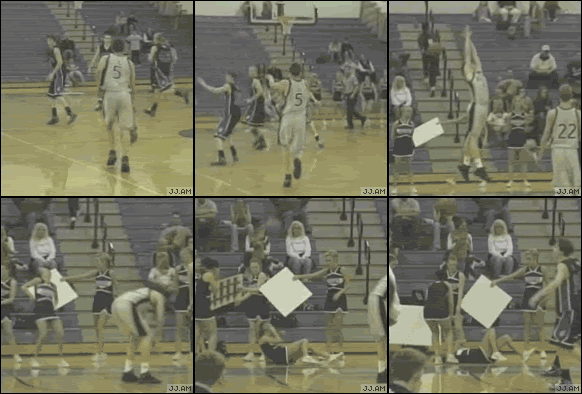
In this video, I'm the cheerleader and Nicaragua is the basketball.
In this video, I'm the unsuspecting spectator and Nicaragua is the sprinter.
In this video, I'm the McDonald's customer and Nicaragua is Ronald McDonald.
Nicaragua-1,000,103 vs. David-2
Saturday, March 01, 2008



Sunday, February 17, 2008
Peace Corps Resume
I’ve been working on my resume and have a few different versions to explain my Peace Corps service. Let me know what you think.
PEACE CORPS NICARAGUA
Small Business Development Volunteer
May 06 – July 08
•Implemented entrepreneurship, business management course in conjunction with Ministry of Education, teaching 320 high school students and resulting in 38 temporary, profitable micro businesses.
•Created community bank offering an informal savings and loan program to 37 members who traditionally fell outside of formal banking environment. Loaned more than $2000 and promoted the creation of small businesses through micro-credit.
•Organized a local and regional business plan competition, coordinating with government officials, Ministry of Education, and local small businesses. Locally raised $100 to support competitions and strengthened relationships among public/private organizations.
•Provided consulting services to local businesses, improving accounting, inventory management, customer service, and marketing.
•Trained and evaluated 3 secondary school teachers in the instruction of small business course.
PEACE CORPS NICARAGUA
Small Business Development Volunteer
May 06 – July 08
•Completed more than 50 books (fiction and nonfiction), increasing reading output to more than 2 books per month. Read and studied more than 5 Pulitzer Prize winning novels.
•Acquired no less than 5 cases of acute diarrhea, defecting in a small, plastic receptacle 2 times to examine and identify contributing factors such as local worms and parasites.
•Eliminated 10 pounds of needed body weight in a 12 hour period with as many visits to a large hole in the ground which also doubled as a toilet.
•Banged my head against a large concrete wall in frustration, boredom, and craziness once a month for 24 months.
PEACE CORPS NICARAGUA
Small Business Development Volunteer
May 06 – July 08
•Humbled by a 27 month Nicaraguan, third world bitch-slapping.
Saturday, December 15, 2007
I want to be safe at home
I was supposed to spend the day making cookies with my host family. Instead, I found myself frozen in the back of pickup truck racing backwards down a mountain. As the truck narrowly missed a tree and the steep cliff approached, I should have been trying to plan some sort of escape. All I could think of, however, was how good a no-bake cookie would taste.
My friend, Oliver, had called me in the morning and invited me to tag along to a rural community where an NGO he works for had built a small school. They had called him in the morning and wanted some pictures of the school with the smiling students in front of it. It seemed like an easy mission, and although I wanted to go I initially declined since, as I mentioned, I had already planned on making cookies for the day. Then, after a little further thought I decided I could make cookies any day, but I would never again get the opportunity to travel to this small, rural community. With the “you only live once” mentality I cancelled my engagements and said “vámonos!”
Oliver picked me up in a red, early 1990s Toyota pickup that he had hired at the bus station. Besides Oliver there was the driver, a mumbling older man that I didn’t understand, and two “helpers” along for the ride. I climbed into the back of the pickup truck with Oliver and one of the helpers, a guy about our age who introduced himself as Victor Victor, and we set out.
The first leg of our journey went well and as I enjoyed the view of the mountains I was pleased with my decision to go. Even better I had decided to let Oliver sit closer to Victor Victor who had started to badger him with questions about digital cameras, the Backstreet Boys, and other gringos he knew. I pretended I didn’t know Spanish and just listened in as Oliver awkwardly explained, “No, Victor Victor, I will not buy you a digital camera, but yes, I do like the Backstreet Boys.”
We easily made it to Telpaneca, a small town about an hour north east from my town, and then turned off the highway onto a small, mountain road towards our final destination. As we got higher up the mountain, the weather turned cold, rainy, and windy, and I soon realized that this community was a lot further away than I had originally thought. Two and a half hours into the trip, we came to an old, one lane bridge with a broken down truck in the middle, blocking the way. With no possible way of getting past the truck, we had to decide to walk the rest of the way or turn around defeated. Cold and wet, I tried to convince Oliver that another hour walking to the community wasn’t worth it. He wasn’t hearing any of it and decided to continue on in the rain. After a long, muddy hike up the mountain we made it to the community, about three and a half hours after we had left my town.
A couple of community members rounded up the students while Oliver and I enjoyed lunch at a teacher’s house. The rain let up, the students showed up, we took some good pictures, and things looked like they might turn out after all. Though it started to rain again on our way back to the truck, we made it back a little before schedule and thought the worst was behind us. Then I remembered that we still had a two and a half hour trip through the rain on a small, muddy mountain road in an old pickup with bald tires, no wipers and a mumbling old man driver. A little nervous, I got back into the back of the truck and we set out in the rain.
When the truck picked up any type of speed, it was difficult to see where we were headed with the rain pelting us harder and harder. I just knew that driving in this weather on this road was not a good idea. Tensely gripping the side of the truck, I watched through the rain as the truck dodged potholes, rivers, and cliffs. It was freezing cold, we were 30 kilometers from the nearest town, and I was sure we weren’t going to make it. Luckily, when we had to stop to wipe the windshield off, the guys in the cabin threw us a large plastic tarp that we could throw over us to shield the rain. Oliver, Victor Victor, and I huddled together, threw the tarp over us and the truck took off. Out of site, out of mind. Now that I couldn’t see what was coming or where we were heading, I relaxed and convinced myself that the driver knew what he was doing.
Another 10 minutes we drove like this. Oliver, Victor Victor and I sitting down in the back of a pickup truck covered with a black tarp reeking of gasoline. I made the unfortunate decision to let Victor Victor sit in the middle of us, so not only did we bump shoulders every thirty seconds as the truck maneuvered through the potholes, he also fired questions at me. Freezing cold, soaking wet, and completely annoyed that I had even decided to come on this trip, I was in no mood to explain to Victor Victor that I don’t like Linkoln Park and that a discman costs $60. When we stopped a second time on a steep incline to clean the windshield, Victor Victor hopped out of the bed of the truck to help and I thought I might take the opportunity to put Oliver in between us again. We didn’t make it any further though.
The truck had stopped on a huge hill. Victor Victor quickly cleaned the windshield and was helping push the truck when the tires started spitting up mud and the driver realized he didn’t have enough momentum to get it going again. Stuck on the hill, the driver put the truck in reverse and slowly started to descend the hill, looking for a flat piece of the road where he could potentially gain enough speed to climb the hill. At this point, Oliver and I were still in the back of the truck peering out of the black tarp. The road looked like a small stream, the hill looked really steep, and Oliver and I traded expressions that said one thing, nervous.
The truck begin to crawl backwards down the mountain before it started to gain a little more speed than I thought necessary. Then, like a rollercoaster at the top of the hill releasing the train from the belt, I felt the brakes give out and the truck started careening down the road gaining speed. Oliver and I sat there frozen, watching as a large tree got closer and closer. It was at this precise moment when I should have been thinking of a way to bail, but things were happening too quickly and all I could think of was the chocolaty, fudgy taste of the cookies I should have been making. I hated myself for deciding to come on the trip and for convincing myself that I could make cookies any day.
I snapped back into reality as I watched the large tree narrowly miss the back bumper and the truck continue towards the cliff. Almost immediately after the tree, the truck fell into a large pothole on the edge of the cliff and it sat there balancing, deciding whether she wanted to fall and take all of the truck’s passengers with her or if she wanted to stay, nervously shaking…cliff, road, cliff, road. Oliver and I jumped out the back and the three men in the cabin hurried out as well. Safe on the road, we rehashed what had actually happened and reviewed the precarious position the truck was in. Then we realized the precarious position we were in. We were all dripping wet and cold, we were 20 kilometers from the nearest town/house, we didn’t have cell phone service, and we were left with only about an hour before nightfall.
Walking up the mountain with his cell phone over his head, Oliver ended up finding service and we were able to call Telpaneca’s mayor’s office and a fellow volunteer that lives in Telpaneca. Since we only had a couple of minutes left on the phone card, we weren’t able to talk for long and we were left a little confused as to whether or not the mayor’s office was sending someone, but they rolled up an hour or so later with a large Toyota Hilux (this story would have been exceptionally better had they arrived in a Chevy Silverado). They managed to pull the small truck off the edge and out of the pothole with a large chain attached to the Hilux. As they were working, the mayor told Oliver and I about another truck and three guys that tried to get up the same hill and weren’t so lucky. The truck’s brakes went out and rather than veering to the left-hand side of the road like we did, it drifted to the right and raced off the steep cliff, killing all three people on board. I felt sick to my stomach when he finished his story.
Victor Victor, Oliver, and I hitched a ride back into Telpaneca with the mayor, arriving around 9pm. Victor Victor was going to Somoto to find a mechanic while the driver and the other helper stayed in the mountains by the truck to make sure no one tried to steal it through the night. We stayed in a hostel and though I was wet, stinky, muddy, cold, and still hanging out with Victor Victor, it felt really nice/secure to lie down safely in a bed. We took the 5am bus back to my town and after saying my goodbyes to Oliver and Victor Victor, I got back into my house around 6:30am, 16 hours after I had initially planned on getting back. I relaxed a little, took a shower, washed my muddy clothes, and then made my way over to my host family’s house. That afternoon we made the best damn cookies I’ve ever tasted.
Thursday, December 13, 2007
Leisure
My friends and I recently built this hammock system. Not as nice as a proper wallow spot in a L-shaped couch but about as close as you'll get in Nicaragua.


Sunday, December 09, 2007

Tuesday, December 04, 2007
The Sad Truth
Two months ago one of my best friends in my town collapsed in her backyard. Her family quickly found her and rushed her to the town health center where they took her to the department capital, Somoto, in a small, run down taxi. From Somoto, she was taken for a three and a half hour ride in an ambulance to a public hospital in Managua where she and her husband were told to go back to Somoto. There was no space and the doctors weren’t available. Since the ambulance had already left, they made the return trip in a school bus. After a stroke, eight hours of travel, and little consultation with any medical professionals, she returned to the same spot where she had collapsed in the morning.
A couple of days after the stroke, I was able to visit her in her home where she was recovering, and though I had been in her house several times before, I wasn’t prepared to see what I saw. Her husband led me into their dirt floor room where they had the small bed that she, her husband, and their 3 year old daughter share. My friend was half asleep with a bandana tied around the lower half of her face, covering the drooping, right hand side of her mouth. Her face was swollen and her glassy eyes rolled around cartoonish-like. A four inch foam mattress sat atop an old metal bed frame that sagged under her weight, nearly touching the ground. Above her, two plastic trash bags were tied to the cinder brick walls in what appeared to be a feeble attempt to catch the water that got through the old tile roof when it rained. The room was damp, dark, and horribly depressing.
I stayed in the room and visited with her and her husband for about 45 minutes. In my year and a half here, I’ve never felt so distinctly the divide between rich and poor. She was struggling to recover from a stroke, holed up in a damp, dirt floor room, sleeping on an old mattress under a leaking roof because she happened to be born in Nicaragua. I wanted to take her to the States. Take her to a hospital where they wouldn’t kick her out. Get her the care that would have prevented a 30 year old woman from having a stroke. Put her in a room worthy of a human being. Give her a small handful of the opportunities that I’ve been given.
While I was sitting in the room, her husband handed me what they always share with me, a cup of coffee, a warm tortilla, and a Nicaraguan cheese, cuajada. In her normal, joking fashion, my friend said, “Ahh, David, you’re used to everything now, even tortillas with cuajada.” I smiled and agreed, but it wasn’t true. I’m not and will never be used to the cruelty of chance and circumstance.
Sunday, November 18, 2007




Saturday, October 27, 2007
Sometimes I hate Nicaragua
This happened to my house a week ago.

Then I found this the following day. I've slept with one eye open since.

Sunday, October 14, 2007
Roads in Nicaragua
This is why I'm currently evacuated to Managua. I took this movie when I was stuck in a rural community 6km from my town. It used to be a road, but with the rains it turned into a river.
Saturday, October 13, 2007
What's New With Me
Since I last posted, I've been home to the states, finished up a major part of my project and survived a "hurricane." Here it all is taken from an email I sent out a couple of weeks ago.
As far as getting back from the states, it was a lot easier this time than it was when I came back after Christmas last year. It was still hard, but I’m just in a much better position now. When I cam back from Christmas I still hadn’t even started formally teaching, so all my work was ahead of me and I still didn’t really know what I was doing. I also came back and the entire month of January was vacation here so it was long and boring. This time most of my teaching is done for the year and everything is just so much easier now that I’ve been here awhile longer. I’m much more comfortable with my work, with my Spanish, with my friends, etc. so it was easier to come back to. It also helped that I have less than a year left to go and am planning on coming back again in December.
When I got back I had two really busy weeks. My class ends with a competition where all of the student business groups present their work and their business plans in the town. The best groups move on to a regional competition where they compete against other schools that have a PC volunteer teaching the same class, and the regional winners go on to a national competition in Managua. So, when I got back I had two weeks to finish teaching the class and organize the local competition. It was a lot of work, but ended up going pretty well.
I had all my groups present in class and from each section I picked the two or three best groups to present at the local competition. We used the town rec-center to hold the event. The first hour the kids sold their products at little tables and whoever showed up could walk around and look at the projects. Then when the power finally came back on (we had to wait for about an hour) each group presented for 8 minutes in front of 4 judges from the town and turned in their final reports. After the presentations, the judges picked the 3 winners that will now compete at regionals. It sounds like something pretty easy to pull off, but it was hard.
The night before I finally got the certificates sent to me from Managua but they ended up having an incorrect name on them, so I went to the internet café at night to make new ones. In the middle of making them, the power went out. The power goes out everyday here from 7:30am until 2pm so I asked the owner if she would open the next morning at 6:30am! She said yes, so I woke up at 6am and made the certificates. Unfortunately she didn’t have certificate paper so I went to a little office supply store here and banged on the door at 7am to see if they had any. They didn’t so we just had to use normal paper. Then I showed up at the rec center and realized I was the one who was supposed to clean it before the event, so I had to recruit kids around the town to bring mops and brooms to help me. When I finally got that done, I went back to the school to take the speakers, microphone, tables, and chairs over with the truck I had arranged to use. Not surprisingly the owner of the truck had decided to go to a different city that day even though he told me he’d be around. So with no other truck available, I recruited more kids to help me carry everything over by hand. I made two or three trips carrying tables and speakers on my back! The people in my town kept yelling at me, “David!! Por que esta trabajando como un burro?” David!! Why are you working like a donkey?
When we finally got started, things went well and I was actually really proud of my students. You think throughout the year that no one is getting anything, but some of them were listening. Granted these were the best 8 or 9 groups of the 24 or so I had so I’m not working with a high percentage of listeners, but nonetheless, I was really happy with the work they did. And it was nice to see them excited about the project and what they had done. It was funny watching them present…they were really nervous, shaking even at some points. My students are mostly 15 years old so most of the time they’re all tough and too cool for school, so it was great to see them so out of their element. When we were finishing the competition I even remember thinking that I wish I could be around for next year’s, so that goes to show what a high point it was for me.
Anyway, since then it’s been great. Now that most of my teaching part is over I’ve told my teachers that I’ll happily still plan class with them, but I’m not teaching anymore. This means I show up for class and help, but really don’t need to do anything…I’m really just preparing the three groups that are going to regionals. It’s a lot less stressful and less frustrating like this. Now when class is cancelled or it doesn’t go well I can just shrug my shoulders and go back to my hammock.
As you can imagine though I have a lot more time on my hands now, so I’m starting to plan some new projects. I’m currently rounding up about 20 names of good students in third year that I can give little classes to after school. These are the kids I’ll teach next year and I would like to give them some classes on leadership, teamwork, communication, presenting, math etc. that will really help them next year with my class. I’m going to try to do this after school where the youth group normally meets so I can kind of kill two birds with one stone. Prepare next year’s students and revitalize the youth group building which isn’t being used at all right now. We’ll see if it works.
I’m also going to try to start a bank like the bank I started at the local school at the community school I teach. I’ve had one meeting with them and things went well but then we never followed up on it, so I’ll have to be a bit more proactive. It sucks to always have to be the cheerleader.
The hurricane was really anticlimactic. All the volunteers around my area were moved to a larger city where we stayed in a hotel for 2 days. Nothing happened where we were (it was actually fairly nice out) but it did hit Nicaraguan’s Atlantic coast really hard. It’s actually been a lot worse here since. Last weekend I wasn’t around my town but apparently it rained horribly hard which explained why half my house was flooded when I got back. You can imagine I was happy about that.
Currently, I'm out of my site and staying in Managua until further notice. It's been raining for a week straight so Peace Corps evacuated a large portion of volunteers to Managua. My town is fine, but I couldn't get out to my rural school because the rivers have risen so much. On my way into Managua we passed a huge sink hole in the middle of the highway. It looked like an earthquake had hit. It'll be interesting to see how long we're holed up in Managua.
Subscribe to:
Posts (Atom)