
Wednesday, February 23, 2011
Kenyan Construction Methods
On my way into work I pass several buildings that are under construction. I've mentioned before that the construction sites I've seen in Nairobi always have many more workers than I'm accustomed to seeing on construction sites in the States. For the most part, machines haven't replaced men. Today, I noticed a vertical assembly line of workers passing up rebar to the top floor of this office building. It has to get up there somehow. And I'm no expert, but I think I could come up with no less than 50 OSHA violations.


Wednesday, February 16, 2011
Unorganized Thoughts After One Month
• I’ve seen two H3 Hummers in my first month here. I still can’t decide where the car is more out of place – Africa or Metro Detroit suburbs. The 4x4 capabilities obviously suits Africa quite well but the price tag is a little more appropriate for suburban US.
• The grocery store where I’ve been shopping is nicer than any Jewel-Osco Chicago. I’m not joking. I was initially really, really shocked that this store, stocked with just about everything you can find in the States, existed in Africa, but now I’m beginning to feel a bit shocked at my initial shock. Why wouldn’t a fully stocked grocery store exist in a city that houses plenty of foreign embassies, Africa’s UN headquarters, a sizeable middle class, and is the largest city between Cairo and Johannesburg? My answer to that a few weeks ago would have probably been very similar to a lot of people’s answer, something along the lines of “because Africa is a continent of disease, famine, war, corruption, and violent crime.” I’m happy to be learning differently...and grocery shopping here:

• On my walk to work or home, I routinely see two or three men in pretty standard work clothes just running down the street. There are never any busses within eye sight that they might be running to, they don’t appear to be being chased, and no one else seems to pay any mind to them. They’re just jogging...in slacks, a tucked in button down, and dress shoes. I can’t figure this out.
• In my first few weeks I kept feeling like I was accidently running into people. I’d be walking into work about to cross paths with someone walking the other way and I’d shift to pass them on my right just like I would normally in the States. Unfortunately, the other person would also try to go that way and we’d end up dancing for a panicked second before stumbling around eachother and continuing on. Cars drive on the left hand side of the road here, so I spent the last few weeks determined to always try to shift to my left (it’s not easy) when I’m about to cross paths with someone. It hasn’t seemed to improve things much. I’m beginning to conclude that Nairobi’s rules for walking are similar to the city’s rules for driving. Anything goes. You can pass on the left or right and should not take into consideration the actions of anyone else on the road. I now just walk in the most convenient path and avoid eye contact with anyone walking in the other direction. They can shift and pass me on whatever side they please. This seems to be working much more effectively, and I think I might be ready to graduate to a seat behind a steering wheel.
• I have yet to visit a restaurant where the number of customers outnumbers the number of employees. This is less about the number of customers, which is normally not an insignificant amount, and more about the number of employees. It has seemed in some cases that there has been a separate employee to take our drink order, take our food order, deliver our drinks, deliver our food, bus our table, present the bill, pick up our bill, deliver change. There are at least two security guards at the entrance and sometimes a parking lot attendant to help you park.
• For anyone having some trouble, I know a guy:

• The grocery store where I’ve been shopping is nicer than any Jewel-Osco Chicago. I’m not joking. I was initially really, really shocked that this store, stocked with just about everything you can find in the States, existed in Africa, but now I’m beginning to feel a bit shocked at my initial shock. Why wouldn’t a fully stocked grocery store exist in a city that houses plenty of foreign embassies, Africa’s UN headquarters, a sizeable middle class, and is the largest city between Cairo and Johannesburg? My answer to that a few weeks ago would have probably been very similar to a lot of people’s answer, something along the lines of “because Africa is a continent of disease, famine, war, corruption, and violent crime.” I’m happy to be learning differently...and grocery shopping here:

• On my walk to work or home, I routinely see two or three men in pretty standard work clothes just running down the street. There are never any busses within eye sight that they might be running to, they don’t appear to be being chased, and no one else seems to pay any mind to them. They’re just jogging...in slacks, a tucked in button down, and dress shoes. I can’t figure this out.
• In my first few weeks I kept feeling like I was accidently running into people. I’d be walking into work about to cross paths with someone walking the other way and I’d shift to pass them on my right just like I would normally in the States. Unfortunately, the other person would also try to go that way and we’d end up dancing for a panicked second before stumbling around eachother and continuing on. Cars drive on the left hand side of the road here, so I spent the last few weeks determined to always try to shift to my left (it’s not easy) when I’m about to cross paths with someone. It hasn’t seemed to improve things much. I’m beginning to conclude that Nairobi’s rules for walking are similar to the city’s rules for driving. Anything goes. You can pass on the left or right and should not take into consideration the actions of anyone else on the road. I now just walk in the most convenient path and avoid eye contact with anyone walking in the other direction. They can shift and pass me on whatever side they please. This seems to be working much more effectively, and I think I might be ready to graduate to a seat behind a steering wheel.
• I have yet to visit a restaurant where the number of customers outnumbers the number of employees. This is less about the number of customers, which is normally not an insignificant amount, and more about the number of employees. It has seemed in some cases that there has been a separate employee to take our drink order, take our food order, deliver our drinks, deliver our food, bus our table, present the bill, pick up our bill, deliver change. There are at least two security guards at the entrance and sometimes a parking lot attendant to help you park.
• For anyone having some trouble, I know a guy:

Zambia is Burning
I'm heading to Zambia at the end of the month to meet with the NGOs and private distributors that sell our pumps. Admittedly, I know very, very little about the country besides the name of its captial city, Lusaka, and that the northern city of Mununga, as written about in Josh Swiller's Peace Corps memoir The Unheard, is frightening. I now also know, after reading about one couple's Zambian honeymoon, that the country is burning, a result of climate change that is causing drought and desertification in sub-Saharan Africa.
You won't find me on any roads at night, but during the daylight hours of my trip, I'm looking forward to learning more about the country and witnessing firsthand how our pumps are being distributed and used. I hope to return to Kenya with words other than "frightening" and "burning" to describe my visit.
You won't find me on any roads at night, but during the daylight hours of my trip, I'm looking forward to learning more about the country and witnessing firsthand how our pumps are being distributed and used. I hope to return to Kenya with words other than "frightening" and "burning" to describe my visit.
Labels:
Africa,
Josh Swiller,
Lusaka,
Zambia

Monday, February 14, 2011
New Pictures
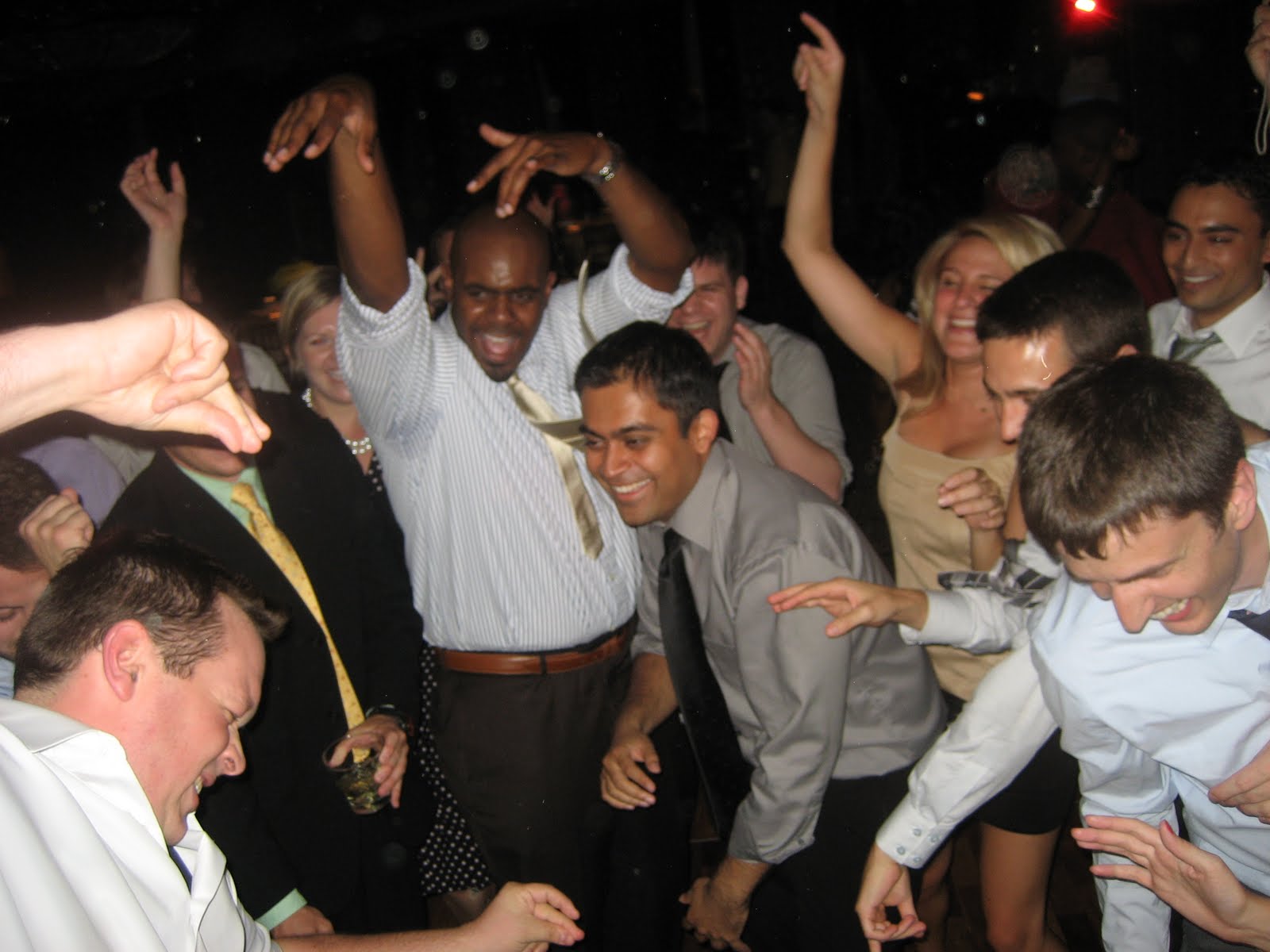
Not many from Kenya, but I just added to my Flickr page a few new pictures, including shots from the Carr wedding. My favorite?
Bone Crusher:

Bone Crusher:
Friday, February 11, 2011
Year of Mobile
For last six months of 2010, working in the online advertising world, I couldn’t get through a meeting without talking about mobile phones. What is our mobile strategy? How do we get started with mobile? How big is mobile? How is mobile different than search? Do you have clients that have retail apps? The questions came from clients trying to keep up with consumers who were more and more likely to be using their mobile phones to browse the web. I sat through two or three presentations from publishers that predicted, based on the current adoption rates of smart phones, that searches done on mobile phones would surpass searches done on computers within two years. The presentations and articles passed around all predicted “2011: The Year of Mobile” and our clients’ questions and sentiments seemed to agree.
Now I’m in Kenya working for a non-profit that sells foot powered irrigation pumps to rural, subsistence farmers. In this world, seemingly far removed from mobile advertising strategy and mobile apps, I’ve found that I still can’t get through many meetings without talking about mobile. The prediction of 2011 being the year of mobile might be correct even here, albeit in a much different way than it was explained in the presentations catered to US advertising.
This Economist article (thanks, Simon) gives a number of examples of how mobile phones are becoming a lot more than just devices to make calls. M-Pesa, which is described in the article, is plastered all over Nairobi on billboards and painted cement walls. In a country where over 60% of the population doesn’t have a bank account, the text based banking has opened up new opportunities for those that traditionally fell outside of the formal banking sector. My organization is currently running a program where farmers can put a pump on layaway, making payments through M-Pesa when they have money available, which will open up our market to farmers that find it hard to come up with the initial investment. There are ideas to start a mobile social network of farmers that will allow them to text a question to the larger group and get answers quickly sent back, making it possible to share information that hasn’t easily been available in the past. What’s the market price for my crop? How do I rotate my crops for better yield? What’s the best irrigation hose?
Last weekend I went on a trip outside of Nairobi with 10 other Americans working and living in Nairobi. 4 of them are directly working on mobile software, creating programs that will help organizations and businesses manage the data that is being gathered through M-Pesa, for example, and building out new services such as text based surveys. For my project, we’re talking to a company that allows you to develop surveys that are done via text message. If the owner of a new pump texts “survey” we can send him/her a series of questions that will help us gather key demographic information, know where our pumps are being used, and ultimately measure our pumps’ impact on farmer income. For the farmers’ time and willingness, we could offer a guarantee of the pump or reward them with cell phone air time. And we could do all of this from the comfort of a Nairobi office, sipping on Kenyan tea while data pours in from cell phones in over 25 different countries.
I noticed this article on Simon’s reading list this week. The title, “Why the Web is Useless in Developing Countries,” is over the top and I found the article’s argument a little weak. A simple phone call to President Mubarek, who just watched his government topple amid protests largely motivated through social media, would probably work in convincing even the biggest cynic that the internet’s power is great. But, after working in Africa for just over a month and witnessing firsthand the exciting development of new mobile uses and tools, I’d have to agree that mobile phones offer a much larger and more immediate opportunity to change and improve the lives of those living in developing countries. Especially in 2011 – the year of mobile.
Now I’m in Kenya working for a non-profit that sells foot powered irrigation pumps to rural, subsistence farmers. In this world, seemingly far removed from mobile advertising strategy and mobile apps, I’ve found that I still can’t get through many meetings without talking about mobile. The prediction of 2011 being the year of mobile might be correct even here, albeit in a much different way than it was explained in the presentations catered to US advertising.
This Economist article (thanks, Simon) gives a number of examples of how mobile phones are becoming a lot more than just devices to make calls. M-Pesa, which is described in the article, is plastered all over Nairobi on billboards and painted cement walls. In a country where over 60% of the population doesn’t have a bank account, the text based banking has opened up new opportunities for those that traditionally fell outside of the formal banking sector. My organization is currently running a program where farmers can put a pump on layaway, making payments through M-Pesa when they have money available, which will open up our market to farmers that find it hard to come up with the initial investment. There are ideas to start a mobile social network of farmers that will allow them to text a question to the larger group and get answers quickly sent back, making it possible to share information that hasn’t easily been available in the past. What’s the market price for my crop? How do I rotate my crops for better yield? What’s the best irrigation hose?
Last weekend I went on a trip outside of Nairobi with 10 other Americans working and living in Nairobi. 4 of them are directly working on mobile software, creating programs that will help organizations and businesses manage the data that is being gathered through M-Pesa, for example, and building out new services such as text based surveys. For my project, we’re talking to a company that allows you to develop surveys that are done via text message. If the owner of a new pump texts “survey” we can send him/her a series of questions that will help us gather key demographic information, know where our pumps are being used, and ultimately measure our pumps’ impact on farmer income. For the farmers’ time and willingness, we could offer a guarantee of the pump or reward them with cell phone air time. And we could do all of this from the comfort of a Nairobi office, sipping on Kenyan tea while data pours in from cell phones in over 25 different countries.
I noticed this article on Simon’s reading list this week. The title, “Why the Web is Useless in Developing Countries,” is over the top and I found the article’s argument a little weak. A simple phone call to President Mubarek, who just watched his government topple amid protests largely motivated through social media, would probably work in convincing even the biggest cynic that the internet’s power is great. But, after working in Africa for just over a month and witnessing firsthand the exciting development of new mobile uses and tools, I’d have to agree that mobile phones offer a much larger and more immediate opportunity to change and improve the lives of those living in developing countries. Especially in 2011 – the year of mobile.
Labels:
Africa,
developing countries,
Kenya,
m-pesa,
mobile services,
Mobile technology
Monday, February 07, 2011

Thursday, February 03, 2011
First Kenyan Field Trip
James picked me up at my apartment 20 minutes after scheduled. He was driving a minbus and I hopped up front into the seat on the left hand side feeling disoriented riding shotgun on the wrong side of the car. We made the very short trip to the office, parked and rode the elevator up to the sixth floor where we were picking up another co-worker, Anne, and then heading out of Nairobi to visit two farmers. Anne wasn’t in the office when we arrived, so we waited and when we finally headed out we were an hour and a half later than originally planned.
James is in his forties, very quick to smile, and from what I can tell has a favourite word. Happy. “I’m very happy to see you, David, and very happy to spending the day with you,” was his greeting and he riddled every other sentence with the word; so much so, it was hard not to return his smiles and yes, be happy. Anne is younger, late twenties or early thirties, with very short hair and thin frame glasses. She sits in the first bench of seats behind the front of the bus and her somewhat quiet voice is hard to hear over the noise of the road as we make our way out of Nairobi.
When you first get to Nairobi, one of the first things you’ll learn is that traffic is bad. Everyone you meet likes to warn you of the rush hour traffic jams and tell you that he wakes up an hour or two earlier so that his commute is 30 minutes rather than the 2 hours it would take in traffic. Judging by my short walk from my apartment to the office, I believe them. The smaller streets that take me to the office are gridlocked with cars, motorcycles, buses, bikes, and people. There are no traffic lights or followed stop signs at intersections, so they quickly become a snarled mess of vehicles inching into to the middle, playing chicken with their counterparts, until they can make their required turn. Pedestrians aren’t given an inch in any of this, so we’re left doing the same, inching out, playing chicken, until we can somewhat safely cross the street. And if I’ve learned anything so far it is that the little old Indian lady driving her BMW, who you think might give you a pleasant wave of her hand to safely let you cross does not. She does not lose a game of chicken.
James weaves through the city streets, through the snarled intersections and equally confusing roundabouts. The mini bus we’re driving has a flat face with no hood so everything is right outside the windshield and the cars in front always look dangerously close. After 10 minutes of city driving we turn onto what James describes as a super highway. It looks like an unorganized and dangerous construction site. There are people everywhere, some walking, some working, others just watching. With cheap labor, an unemployment rate of 40%, and not much capital to invest in Caterpillar machines, Kenya has replaced the backhoes, concrete mixers, and pavers of a US road crew with human workers. Hundreds of them peppering what will become some sort of “super highway.” The road goes from a very reddish dirt to paved, paved to dirt, from two lanes to three and then to one and back to two. But the traffic is moving in our direction, out of town, unlike the cars stopped on the other side trying to get into the city. Between the people, traffic, construction, and changing grades of road I find myself not sure where to look or what to focus on.
Anne points towards the green mountains in the distance and says that’s where we’re headed. Before we get there, we pass through two or three towns. I notice a surprising number of places advertising car washes and every other cement building seems to be a beauty parlor. I point the later out to Anne who finds it a lot funnier than I intended it to be. Again, people all over line the streets. We pass two markets of tightly lined up wooden shacks or tin roofed structures in dirt lots, with most of the shacks selling vegetables. The markets seem to be the center of activity with people and rickshaws weaving in and out of the road. At one point while driving up a hill, there’s a man pushing a wooden rickshaw in the opposite direction, down the hill. The rickshaw is loaded with something I can’t make out but based on his speed, the weight of his goods give him significant momentum. He is barrelling down the hill, putting a foot down to lift the rickshaw up and then riding airborne for 30 feet until he puts the other foot down and launches himself again. He speeds by us hanging on to the rickshaw, his feet dangling 5 feet off the ground. Amazed by his speed and recklessness I let out an unintentional “woah!” Laughing, James jokingly asks if I’ve seen anything like that in the states. None of us can quite figure out how the daredevil plans to stop the rickshaw.
We finally get out to the mountains and turn off the road onto a one lane dirt road that heads down a steep hill and park the bus 400-500 yards down the hill. The trip out of Nairobi seemed like an endless string of crude apartment buildings, shops, restaurants, and people, but we park the bus in a very quiet, rural area surrounded by large green hills. The path we walk down winds through small farm plots and James points out the different vegetables. Cabbage and spinach take the title of most popular. We come to a steep drop and below see a clearing. It’s a small farm set right up against a creek. There’s a hose with one end in the creek and the other end attached to a blue pump which looks like a small stair stepper exercise machine. A farmer is leaning on a narrow piece of steel that rises up from the pump as a means of support while he pumps his legs up and down. His stair stepper motion pulls water out of the creek, through the hose, through the pump, and through a hose connected to the other side of the pump. This hose extends 20 or so feet into his plot where his son uses the water pumping out of the end of the hose to water the crops. The pumps blue paint stands out the brightest in the field. It looks a little out of place and the power with which the water exits the one end of the hose is surprising.
We talk to the farmer while he’s working, pumping up and down on the foot pedals. He’s barefoot and is wearing a tattered golf shirt that swallows his wiry frame. He’s broken a good sweat and explains that he does this 6 hours a day, that since he bought the pump he’s doubled the size of his land and has starting building a new house. He has five kids, one of whom is only 3 months old and is described, with a smile, as a mistake. The rest of his kids are older and he says that he’s been able to afford their schooling with the income from the larger farm. The pump waters his crops more efficiently than what he had to do before which was stick a bucket into the creek, fill it, and then carry it and finally dump it over his crops. He did this 6 hours a day, the same amount of time he works with the pump, but was only able to cultivate a piece of land that was barely sufficient to keep food on the table, let alone pay for school fees. Because the pump waters the crops more quickly, he can water and tend a larger area of land, allowing him to earn more than what he ever would have aspired to with a simple bucket in his hand. He explains all this, sweating and pumping in the hot sun, with a palpable enjoyment and satisfaction.
We move on to another farmer that is nearby and hear a similar heart warming and meaningful story. This farmer is a woman and with the help of the blue pump has found even more success than the first farmer. She’s used it for close to two years and now half of her farm, which has grown significantly since she started, is for vegetables that she sells to a large food manufacturing company. The profits from her six hour days support her family of six. She says she has a lot of people asking to borrow the pump but never lets them, “They can buy their own pump.” A hard worker with a competitive spirit, I think. It’s no wonder she’s made a good entrepreneur.
We trek back through the fields and take off in the bus. James is very, very happy I was able to see the pumps in action. I agree and also note how nice it was to see parts of the country outside of Nairobi. We make our way back into the city using a different route that actually feels remarkably similar to how we left the city. People, car washes, beauty parlors, markets, and rickshaws line the road. Traffic is dense, construction is everywhere. We get back to the office, our field trip finished.
I head to my desk and open an Excel spreadsheet. Rows of numbers stare back at me from the screen, accounting for pumps sold, shipped, and delivered. In the past, Excel spreadsheets have mocked me for the countless hours I’ve spent calculating and formatting numbers and data points that seem worthless and hollow. But today, I win. These numbers represent blue pumps, new entrepreneurs, and school fees. These numbers have meaning.
James is in his forties, very quick to smile, and from what I can tell has a favourite word. Happy. “I’m very happy to see you, David, and very happy to spending the day with you,” was his greeting and he riddled every other sentence with the word; so much so, it was hard not to return his smiles and yes, be happy. Anne is younger, late twenties or early thirties, with very short hair and thin frame glasses. She sits in the first bench of seats behind the front of the bus and her somewhat quiet voice is hard to hear over the noise of the road as we make our way out of Nairobi.
When you first get to Nairobi, one of the first things you’ll learn is that traffic is bad. Everyone you meet likes to warn you of the rush hour traffic jams and tell you that he wakes up an hour or two earlier so that his commute is 30 minutes rather than the 2 hours it would take in traffic. Judging by my short walk from my apartment to the office, I believe them. The smaller streets that take me to the office are gridlocked with cars, motorcycles, buses, bikes, and people. There are no traffic lights or followed stop signs at intersections, so they quickly become a snarled mess of vehicles inching into to the middle, playing chicken with their counterparts, until they can make their required turn. Pedestrians aren’t given an inch in any of this, so we’re left doing the same, inching out, playing chicken, until we can somewhat safely cross the street. And if I’ve learned anything so far it is that the little old Indian lady driving her BMW, who you think might give you a pleasant wave of her hand to safely let you cross does not. She does not lose a game of chicken.
James weaves through the city streets, through the snarled intersections and equally confusing roundabouts. The mini bus we’re driving has a flat face with no hood so everything is right outside the windshield and the cars in front always look dangerously close. After 10 minutes of city driving we turn onto what James describes as a super highway. It looks like an unorganized and dangerous construction site. There are people everywhere, some walking, some working, others just watching. With cheap labor, an unemployment rate of 40%, and not much capital to invest in Caterpillar machines, Kenya has replaced the backhoes, concrete mixers, and pavers of a US road crew with human workers. Hundreds of them peppering what will become some sort of “super highway.” The road goes from a very reddish dirt to paved, paved to dirt, from two lanes to three and then to one and back to two. But the traffic is moving in our direction, out of town, unlike the cars stopped on the other side trying to get into the city. Between the people, traffic, construction, and changing grades of road I find myself not sure where to look or what to focus on.
Anne points towards the green mountains in the distance and says that’s where we’re headed. Before we get there, we pass through two or three towns. I notice a surprising number of places advertising car washes and every other cement building seems to be a beauty parlor. I point the later out to Anne who finds it a lot funnier than I intended it to be. Again, people all over line the streets. We pass two markets of tightly lined up wooden shacks or tin roofed structures in dirt lots, with most of the shacks selling vegetables. The markets seem to be the center of activity with people and rickshaws weaving in and out of the road. At one point while driving up a hill, there’s a man pushing a wooden rickshaw in the opposite direction, down the hill. The rickshaw is loaded with something I can’t make out but based on his speed, the weight of his goods give him significant momentum. He is barrelling down the hill, putting a foot down to lift the rickshaw up and then riding airborne for 30 feet until he puts the other foot down and launches himself again. He speeds by us hanging on to the rickshaw, his feet dangling 5 feet off the ground. Amazed by his speed and recklessness I let out an unintentional “woah!” Laughing, James jokingly asks if I’ve seen anything like that in the states. None of us can quite figure out how the daredevil plans to stop the rickshaw.
We finally get out to the mountains and turn off the road onto a one lane dirt road that heads down a steep hill and park the bus 400-500 yards down the hill. The trip out of Nairobi seemed like an endless string of crude apartment buildings, shops, restaurants, and people, but we park the bus in a very quiet, rural area surrounded by large green hills. The path we walk down winds through small farm plots and James points out the different vegetables. Cabbage and spinach take the title of most popular. We come to a steep drop and below see a clearing. It’s a small farm set right up against a creek. There’s a hose with one end in the creek and the other end attached to a blue pump which looks like a small stair stepper exercise machine. A farmer is leaning on a narrow piece of steel that rises up from the pump as a means of support while he pumps his legs up and down. His stair stepper motion pulls water out of the creek, through the hose, through the pump, and through a hose connected to the other side of the pump. This hose extends 20 or so feet into his plot where his son uses the water pumping out of the end of the hose to water the crops. The pumps blue paint stands out the brightest in the field. It looks a little out of place and the power with which the water exits the one end of the hose is surprising.
We talk to the farmer while he’s working, pumping up and down on the foot pedals. He’s barefoot and is wearing a tattered golf shirt that swallows his wiry frame. He’s broken a good sweat and explains that he does this 6 hours a day, that since he bought the pump he’s doubled the size of his land and has starting building a new house. He has five kids, one of whom is only 3 months old and is described, with a smile, as a mistake. The rest of his kids are older and he says that he’s been able to afford their schooling with the income from the larger farm. The pump waters his crops more efficiently than what he had to do before which was stick a bucket into the creek, fill it, and then carry it and finally dump it over his crops. He did this 6 hours a day, the same amount of time he works with the pump, but was only able to cultivate a piece of land that was barely sufficient to keep food on the table, let alone pay for school fees. Because the pump waters the crops more quickly, he can water and tend a larger area of land, allowing him to earn more than what he ever would have aspired to with a simple bucket in his hand. He explains all this, sweating and pumping in the hot sun, with a palpable enjoyment and satisfaction.
We move on to another farmer that is nearby and hear a similar heart warming and meaningful story. This farmer is a woman and with the help of the blue pump has found even more success than the first farmer. She’s used it for close to two years and now half of her farm, which has grown significantly since she started, is for vegetables that she sells to a large food manufacturing company. The profits from her six hour days support her family of six. She says she has a lot of people asking to borrow the pump but never lets them, “They can buy their own pump.” A hard worker with a competitive spirit, I think. It’s no wonder she’s made a good entrepreneur.
We trek back through the fields and take off in the bus. James is very, very happy I was able to see the pumps in action. I agree and also note how nice it was to see parts of the country outside of Nairobi. We make our way back into the city using a different route that actually feels remarkably similar to how we left the city. People, car washes, beauty parlors, markets, and rickshaws line the road. Traffic is dense, construction is everywhere. We get back to the office, our field trip finished.
I head to my desk and open an Excel spreadsheet. Rows of numbers stare back at me from the screen, accounting for pumps sold, shipped, and delivered. In the past, Excel spreadsheets have mocked me for the countless hours I’ve spent calculating and formatting numbers and data points that seem worthless and hollow. But today, I win. These numbers represent blue pumps, new entrepreneurs, and school fees. These numbers have meaning.
Monday, January 31, 2011

Thursday, January 27, 2011
Peace Corps, Expat Aid Workers
These gems were just passed along to me by two different friends. The first one needs no comment.
The second is a blog similar to Stuff White People Like but it's focused on expat aid workers. I found myself laughing and cringing, sometimes at the same time, while reading through. I've been guilty of a lot of it. Take, for example, the start of number four on Drivers which is eerily close to my description of arriving in Nairobi:
Note: I've learned in my few short weeks in Nairobi that serving in the Peace Corps immediately gives you a deep reservoir of field cred in the eyes of non PC expat aid workers.
The second is a blog similar to Stuff White People Like but it's focused on expat aid workers. I found myself laughing and cringing, sometimes at the same time, while reading through. I've been guilty of a lot of it. Take, for example, the start of number four on Drivers which is eerily close to my description of arriving in Nairobi:
Upon arriving at the airport in a new country after a long flight, followed by the entanglement that is immigration, luggage retrieval, and customs, you stumble sweaty and bleary-eyed into the arrival pen. You scan the sea of unfamiliar faces, desperately hoping to see a sheet of A4 with your name on it. There it is! You make eye contact, nod and smile. And as you hand your whole being over to that other human, you can relax: You’re with the driver now.I also liked number 14 on hot showers (the shower head in my bathroom is a "suicide shower") and this tidbit from Establishing Field Cred:
You can also drop hints that you’ve got field cred by always pronouncing the names of cities and countries the way a local would (eg., Nee-ka-ra-wa instead of Nik-uh-rah-gwa).In the Peace Corps, I had a pretty good idea of whether or not I'd like you based on how you pronounced Nicaragua. Trying to establish field cred, in this case, wasn't going to get you very far.
Note: I've learned in my few short weeks in Nairobi that serving in the Peace Corps immediately gives you a deep reservoir of field cred in the eyes of non PC expat aid workers.
Labels:
Peace Corps,
Stuff Expat Aid Workers Like
Monday, January 24, 2011
My New Digs
You'll be surprised that my apartment building looks like this:

And that I cook in a kitchen like this:

To entertain my guests here:


Before resting my head here:


And that I cook in a kitchen like this:

To entertain my guests here:


Before resting my head here:

Saturday, January 22, 2011
Trip Over
Because leaving Chicago involved a move out of my apartment before the holidays, a trip to Phoenix for Christmas, a trip to Puerto Rico from Phoenix for New Years and finally back to Chicago for four days before my departure to Nairobi, my packing was done haphazardly and left me lugging a 60lb suitcase, a 50lb duffel, and a full backpack to O’Hare. The ticket agent at British Airways charged me $50 for the heavy suitcase but then promptly upgraded my trip to London to business class. $50 well spent, I thought. I settled into my window seat’s spacious digs next to a 70 year old woman also on her way to Nairobi for an African safari. Of course I didn’t actually talk to her or ask her where she was headed but judging by her smart hiking boots, her husband’s (who sat right across the aisle) breathable khaki button down, and a Frommer’s Kenya book I pegged her pretty quickly. I even heard her practicing Swahili under her breath. “Oh, it says here ‘Jambo!’ means hello.”
We were delayed at the gate for almost 2.5 hours but when your total trip is estimated at 18 hours and you have a safe buffer of time for the London connection, delays don’t seem too frustrating. We finally took off around 8pm and through the plane window I kissed Chicago goodbye.
7 or so hours later, we arrived at London Heathrow and my connection was uneventful. I had just enough time in the airport to grab a bottle of water, hit the restroom, and find my gate for the 8 hour flight to Nairobi. Though I didn’t have the business class upgrade on this leg of the journey, I managed to snag an exit row while checking in. Unfortunately, when I boarded the plane I found that my exit row seat didn’t have a window and was the closest row to the bathroom. I appreciated the extra leg room on the long flight, but I tend to put a higher premium on the clouds, stars, waters, mountains, etc. you can stare at from a plane window, so I was disappointed to find my only view would be passengers entering and exiting the john. Thankfully, I put my headphones in and was able to fitfully sleep through most of the flight.
Touching down in Nairobi brought a number of firsts. It was, by a long shot, the farthest I had been from home, and it was my first time on the southern side of the equator and my first time in Africa. I’d like to say that I reflected on this and came to some intelligent conclusion on world travel, but I was preoccupied by the normal logistics of any arrival. We exited the plane and lined up to pass through customs. The Nairobi airport though a bit older and run down in some areas was nicely organized and easy to navigate. Customs was a breeze. I paid for my $25 entry visa and was passed through with little more than a stamp of the passport and a wave of the agent’s hand. I headed downstairs, picked up my two bags from the carousel and headed over to where they had an additional eight agents working to inspect bags. Again, a smile passed me through without bother.
Rolling my bags through a narrow hallway, I entered into a larger lobby. There was a rope ten feet from the entry way with 50-60 people waving placards with names. I had been told that Josef would be waiting for me and sure enough, I spotted my name in the crowd and walked over. Josef must have done this before because as he saw that I was heading his way, his eyes got a little bigger, he called my name, smiled, and when I reached him, shook my hand firmly. “Welcome to Kenya,” he said. I had been a little nervous about the late night arrival to Nairobi and was sure that “meeting a guy at the airport” wasn’t going to work out too smoothly. It felt good, after a long flight and the nerves, to be in what felt like secure hands. Thank you, Josef.
He helped get my bags outside and asked me to wait while he pulled the car around. Our trip into town was about 15 minutes, passing just outside the central business district of Nairobi and into an area called Parklands where a new co-worker waited for my arrival at the corporate apartment. Because it was 11pm, I didn’t get a good view of the city, but upon first glance, Nairobi was much taller than I had imagined. The whole trip into Parklands was lined with buildings above 5 stories and the main downtown area had a legit skyline of buildings, with the tallest, Times Tower, coming in at 38 stories.
We pulled into the apartment building and Josef again helped me with my bags. The apartment was nicer than I had imagined, and my co-worker showed me my private room and bath for the night. I set my stuff down, sat on the bed and looked at my watch. 11:30pm, exactly 24 hours after leaving the Chicago apartment I had safely arrived to the city I would call home for the next nine months. I thought of my safari bound seat mate from my Chicago to London flight and said, under my breath, “Jambo, Nairobi.” I slept soundly through the first night.
We were delayed at the gate for almost 2.5 hours but when your total trip is estimated at 18 hours and you have a safe buffer of time for the London connection, delays don’t seem too frustrating. We finally took off around 8pm and through the plane window I kissed Chicago goodbye.
7 or so hours later, we arrived at London Heathrow and my connection was uneventful. I had just enough time in the airport to grab a bottle of water, hit the restroom, and find my gate for the 8 hour flight to Nairobi. Though I didn’t have the business class upgrade on this leg of the journey, I managed to snag an exit row while checking in. Unfortunately, when I boarded the plane I found that my exit row seat didn’t have a window and was the closest row to the bathroom. I appreciated the extra leg room on the long flight, but I tend to put a higher premium on the clouds, stars, waters, mountains, etc. you can stare at from a plane window, so I was disappointed to find my only view would be passengers entering and exiting the john. Thankfully, I put my headphones in and was able to fitfully sleep through most of the flight.
Touching down in Nairobi brought a number of firsts. It was, by a long shot, the farthest I had been from home, and it was my first time on the southern side of the equator and my first time in Africa. I’d like to say that I reflected on this and came to some intelligent conclusion on world travel, but I was preoccupied by the normal logistics of any arrival. We exited the plane and lined up to pass through customs. The Nairobi airport though a bit older and run down in some areas was nicely organized and easy to navigate. Customs was a breeze. I paid for my $25 entry visa and was passed through with little more than a stamp of the passport and a wave of the agent’s hand. I headed downstairs, picked up my two bags from the carousel and headed over to where they had an additional eight agents working to inspect bags. Again, a smile passed me through without bother.
Rolling my bags through a narrow hallway, I entered into a larger lobby. There was a rope ten feet from the entry way with 50-60 people waving placards with names. I had been told that Josef would be waiting for me and sure enough, I spotted my name in the crowd and walked over. Josef must have done this before because as he saw that I was heading his way, his eyes got a little bigger, he called my name, smiled, and when I reached him, shook my hand firmly. “Welcome to Kenya,” he said. I had been a little nervous about the late night arrival to Nairobi and was sure that “meeting a guy at the airport” wasn’t going to work out too smoothly. It felt good, after a long flight and the nerves, to be in what felt like secure hands. Thank you, Josef.
He helped get my bags outside and asked me to wait while he pulled the car around. Our trip into town was about 15 minutes, passing just outside the central business district of Nairobi and into an area called Parklands where a new co-worker waited for my arrival at the corporate apartment. Because it was 11pm, I didn’t get a good view of the city, but upon first glance, Nairobi was much taller than I had imagined. The whole trip into Parklands was lined with buildings above 5 stories and the main downtown area had a legit skyline of buildings, with the tallest, Times Tower, coming in at 38 stories.
We pulled into the apartment building and Josef again helped me with my bags. The apartment was nicer than I had imagined, and my co-worker showed me my private room and bath for the night. I set my stuff down, sat on the bed and looked at my watch. 11:30pm, exactly 24 hours after leaving the Chicago apartment I had safely arrived to the city I would call home for the next nine months. I thought of my safari bound seat mate from my Chicago to London flight and said, under my breath, “Jambo, Nairobi.” I slept soundly through the first night.
Friday, January 21, 2011

Wednesday, January 19, 2011
Blogger/daveande Stats
I've spent a little bit more time than normal within Blogger over the last few days, updating the blog's design and checking out the stats that are now available. I think the stats have been included in Blogger for some time now, but I haven't taken a look until recently. Blogger now provides the number of pageviews your blog has registered over any given time period and breaks out your pageviews by specific post and/or traffic source. What did I find when looking at daveande stats? A couple of funny things.
I nearly own the Google search term "syllabus week" coming in at number two right behind Urban Dictionary. Just this week, college students Googling "syllabus week" or some variation have registered 111 page views on my post about Nicaragua's syllabus week.

The daveande post with the most pageviews since May 2010 is Peace Corps Resume. I wonder how many big hearted, adventure seeking, service oriented people have Googled "Peace Corps resume" in hopes of finding some info on how best to format a resume for the Peace Corps application only to come across my post. "Banged my head against a large concrete wall in frustration, boredom, and craziness once a month for 24 months" may have been the basis for some second thoughts and new career decisions.
I nearly own the Google search term "syllabus week" coming in at number two right behind Urban Dictionary. Just this week, college students Googling "syllabus week" or some variation have registered 111 page views on my post about Nicaragua's syllabus week.

The daveande post with the most pageviews since May 2010 is Peace Corps Resume. I wonder how many big hearted, adventure seeking, service oriented people have Googled "Peace Corps resume" in hopes of finding some info on how best to format a resume for the Peace Corps application only to come across my post. "Banged my head against a large concrete wall in frustration, boredom, and craziness once a month for 24 months" may have been the basis for some second thoughts and new career decisions.
Labels:
Blogger,
Blogger stats,
Peace Corps,
Syllabus Week
Tuesday, January 18, 2011
Arrival
It was a relief to finally board the plane and take off. When I first decided to take the job, I was afraid I wouldn’t have enough time to get everything in order and take care of all the loose ends that come along with dropping a life in Chicago and moving to Kenya. It turns out, though, that I should have been more afraid of having too much time. Too much time to second guess, too much time to worry and wonder. In those moments of doubt there was always a chance to say “I’m not going to do this,” and those thoughts were a stressful burden right up until the last minute. When we finally took off though, the decision was made. There was no going back and the definitiveness felt good after two months of questioning.
But definitiveness is a lot different than excitement and confidence. I was both confident and excited about my decision, but a lot less so than I would have liked to be for such a big commitment. It was easy applying for the job and convincing myself that I’d do anything, even move to Africa, for nine months, but the last month leading up to the actual move was a lot harder than I anticipated. I’ll have plenty of time to sort all that out, but at this point, the decision is made and I’m already into my second week in Nairobi.
So far, so good, although it’s fair to say my expectations were really low since my closet frame of reference was the Peace Corps. Within two days of arriving to Nicaragua, I was dropped off in a small town and expected to live with a family that spoke no English. The mornings started with a bucket bath of icy cold water followed by rice and beans for breakfast. The nights were capped off by crawling through a mosquito net and falling asleep to the unfamiliar sounds of roosters and feral dogs. The first week was more uncomfortable than anything I had imagined. By moving to Kenya, I knew I wasn’t getting myself into something like that again but having gone through that, my first week in Nairobi has been a breeze, complete with pleasant surprises. A king size bed, wireless internet, hot water, a full grocery store, and a 9-5 life not unlike Chicago’s will go a long way in keeping me happy. And it’s infinitely easier to adjust to a new country when you can understand what’s being said to you, especially when during the first week the most repeated phrase from my Kenyan co-workers was “Welcome to Kenya. Welcome to Africa.” Indeed.
But definitiveness is a lot different than excitement and confidence. I was both confident and excited about my decision, but a lot less so than I would have liked to be for such a big commitment. It was easy applying for the job and convincing myself that I’d do anything, even move to Africa, for nine months, but the last month leading up to the actual move was a lot harder than I anticipated. I’ll have plenty of time to sort all that out, but at this point, the decision is made and I’m already into my second week in Nairobi.
So far, so good, although it’s fair to say my expectations were really low since my closet frame of reference was the Peace Corps. Within two days of arriving to Nicaragua, I was dropped off in a small town and expected to live with a family that spoke no English. The mornings started with a bucket bath of icy cold water followed by rice and beans for breakfast. The nights were capped off by crawling through a mosquito net and falling asleep to the unfamiliar sounds of roosters and feral dogs. The first week was more uncomfortable than anything I had imagined. By moving to Kenya, I knew I wasn’t getting myself into something like that again but having gone through that, my first week in Nairobi has been a breeze, complete with pleasant surprises. A king size bed, wireless internet, hot water, a full grocery store, and a 9-5 life not unlike Chicago’s will go a long way in keeping me happy. And it’s infinitely easier to adjust to a new country when you can understand what’s being said to you, especially when during the first week the most repeated phrase from my Kenyan co-workers was “Welcome to Kenya. Welcome to Africa.” Indeed.
Renaissance State of Mind - Version 2
Another version of Empire State of Mind Detroit style. This one has some pretty clever lyrics, especially since it was written by fourth through seventh graders at Detroit Academy of Arts and Sciences. My favorite - "We love our city so don't have a pity."
You can find the first one here.
Empire State of Mind: Detroit Style from frank collins on Vimeo.
You can find the first one here.
Labels:
Detroit
Sunday, January 16, 2011
Thursday, November 18, 2010
Sunday, November 14, 2010
Saturday, September 25, 2010
Doorknob in Spanish?
I just came across this while visiting the Push for Peace Corps website. Peter Hessler's strong defense of the Peace Corps, in response to Nicholas Kristof's March 2010 critique of the organization while calling for the formation of a Teach for the World initiative, is passionate, funny, and accurate. Give it a read.
I didn't know the word for doorknob in Spanish. There weren't any doorknobs in Palacaguina. Seriously. But if you want to know how to actually communicate like a Nicaraguan, I'm your guy. America would be a wiser country if we had more people who had an intimate understanding of a foreign culture. And that doesn't require knowing the word for doorknob.
I didn't know the word for doorknob in Spanish. There weren't any doorknobs in Palacaguina. Seriously. But if you want to know how to actually communicate like a Nicaraguan, I'm your guy. America would be a wiser country if we had more people who had an intimate understanding of a foreign culture. And that doesn't require knowing the word for doorknob.
Labels:
Peace Corps,
Peter Hessler,
Push for Peace Corps
Subscribe to:
Posts (Atom)