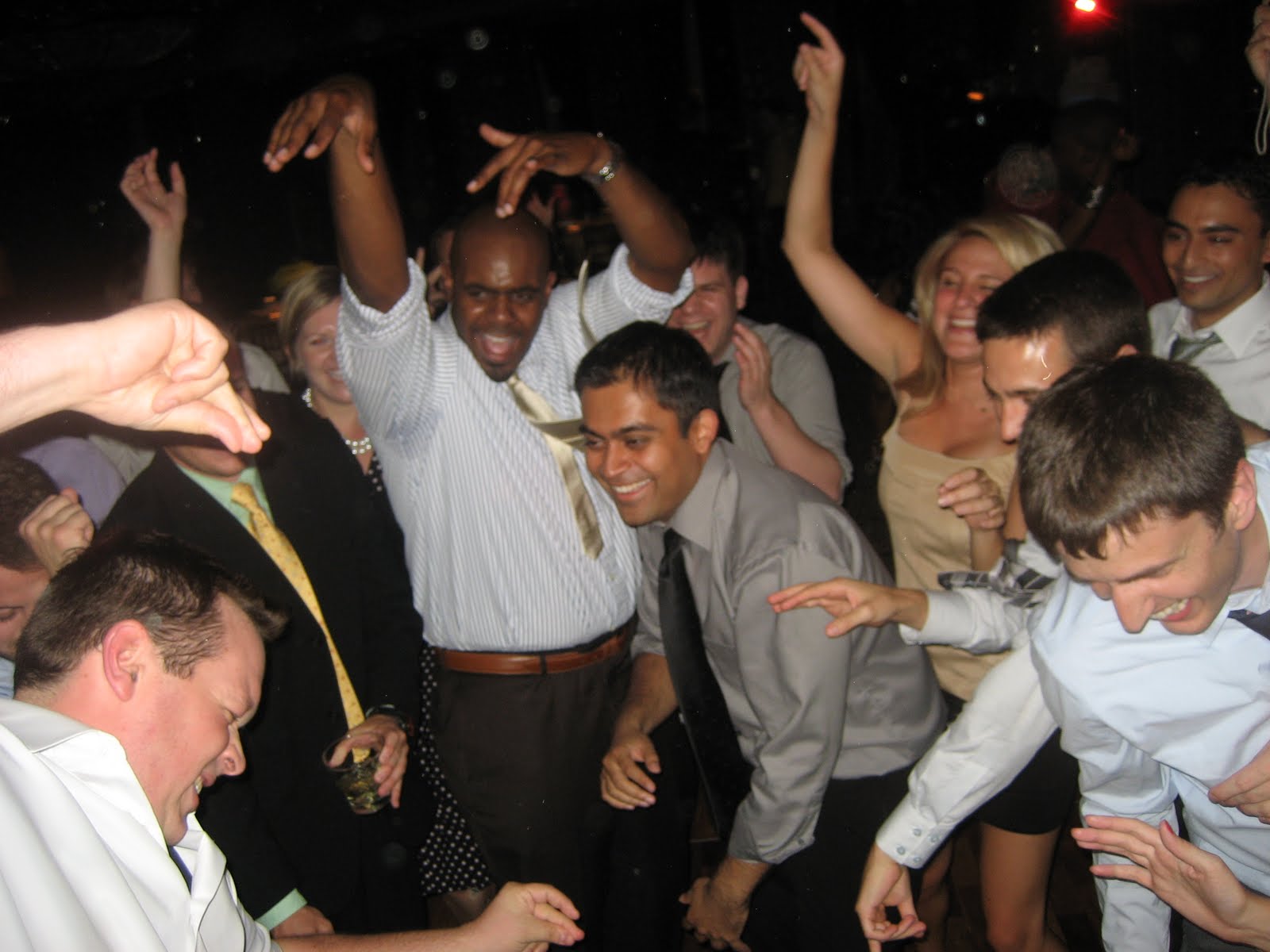
Thursday, March 24, 2011

Week in Malawi: Part Three

Tuesday, March 15th

After breakfast, we head on over to an NGO that uses our pumps in the irrigation programs they run throughout the country. I’ve been corresponding with this group from Nairobi via email and phone and it’s nice to meet some of the people I’ve already worked with. They’ve been remarkably helpful and are much better organized than the NGOs I met with in Zambia.

As a first step in my project, I’m trying to gather the names and locations of all the farmers that are using our pumps in Zambia and Malawi. I figured that the NGOs would definitely have this information readily available and thought it might be as easy as asking them to email me the Excel file. It has proved much more difficult. In Zambia, I found that I’d meet with someone in the capital who would tell me that the info exists but that I’d have to contact the regional office. I’d contact the regional office and they’d say that the info exists but it’s in the hands of the field workers. I’d contact a field worker who would confirm he does have the information but it isn’t compiled in an Excel file or easy to quickly send along to my email. Worse, the names and locations of farmers isn’t sent to the regional or national offices at any point, so getting my hands on this information would mean contacting the hundreds of individual field workers working in remote parts of the country.

The NGO we’re meeting with now has a similar situation – the names and locations of farmers they work with reside in the hands of their field workers. Hearing this news this morning, in a second floor, horribly hot office, makes me want to bang my head against the office wall. I’m deflated, but before I can do anything rash, Olivia, the woman we’re meeting with, gives us some great news. They like the idea of gathering this detailed information and have started to require their field staff to send in the required data. She opens an Excel file where they’ve already organized the names and locations of 900 farmers, a far cry from the 3000 or so pumps they’ve bought in the past two years but a great start. Better yet, they’re using the exact data collection template I created, meaning everything that I’ll need is included, and they’ve hired someone who will compile this information on a quarterly basis. I feel like giving Olivia a high five and a giant bear hug. Instead, we simply finish up the meeting and say goodbye. Once out of the office, my boss describes the meeting as “very fruitful” which makes me silently laugh. I find it a funny adjective to use to describe a meeting but don’t disagree with the assessment.

I like travelling with my boss. We spent a week in Zambia together and now will spend this first week in Malawi together. He’s Kenyan, in his early fifties, and has a tendency to follow up any sentence with a very audible and somewhat long “mmmm.” He’s the director of the export program so most of his job is sales related, trying to secure orders from private distributors, governments, and NGOs that are in countries where we don’t have staff. He travels a lot throughout Africa, and in our first week in Zambia, I could quickly tell he’s used to being on the road, making friends with everyone we come into contact with and expertly negotiating all of our taxi fares. I love letting him handle the taxi fares as I find the negotiation it requires awkward and stressful. I’ve picked up that his favourite tactic is starting with “I have my price and you have your price, so we’ll start at your price.” The price given is always scoffed at and my boss replies that we’ll pay half the stated fare, but we usually pay about 60% of the initial quote. Besides being a good negotiator and an outgoing salesman, he also strikes me as a little clumsy, though I’m beginning to think that it might just be the ridiculously pointy dress shoes he wears. I’ve watched him trip over stairs on two different occasions and had to grab him once after he slipped in the hotel hallway. After saving him from a fall, my hand still snugly in his armpit, he says “Ohhh, thank you! Mmmmmmmmm.”

Today we’re headed to Blantyre, Malawi’s large commercial city in the southern portion of the country. I’m told it’s a four hour bus ride which doesn’t seem too bad, and I’m actually looking forward to a trip into the country. Before we leave for the bus stop, we stop by the distributor we visited yesterday to try to get the additional information they said they would gather. Not surprisingly, the information isn’t waiting for us and we spend thirty minutes waiting while they do what they said they would. Yesterday after explaining what we’re looking for and presenting a few examples of how me might go about working with them to get the data we require, the man in charge reminds us that they’re very busy and doesn’t seem too keen on doing anything more than what they’re currently doing. The “we’re too busy” is a response we’ve gotten a lot over the last two weeks and though I appreciate that we’re asking them to do extra work, I find “busy” a generous way to describe their day. Today, the same man that described his business as “very busy” is busy reading two newspapers while his staff of two handles the heavy foot traffic in the store - one person in the 45 minutes we’re there. Nonetheless, we get the info we were looking for and head over to the Lilongwe bus station.

I’ve found that bus stations in developing countries are terribly vile things and would recommend, if you’re visiting one, that you wear closed shoes and jeans. Anything to distance yourself from the filth. Lilongwe’s “station” certainly falls into this category. It’s a disgusting mud filled lot with around 50 beat up buses waiting in an unorganized fashion and hundreds of people aimlessly wandering about looking like they might steal your bag. The moment we exit the taxi is the moment I want to leave. Predictably, there are 8-10 dudes surrounding us right when we get out of the taxi, each yelling, asking, directing. “Where are you going? Yes, boss! Going to Blantyre. This bus, this bus, this bus, this bus. We’re leaving now!” We’re more or less pulled to a bus where a guy quickly starts to scribble a ticket. I know better than to believe this guy who keeps telling us that they’re leaving now and will be in Blantyre in three hours. I’ve learned from very hard experience that these guys will tell you anything you want to hear to just get you on their bus. The bus isn’t leaving now, it leaves when it fills up, and the trip will take double the amount of time he’s telling you. But you’re easily overwhelmed with everyone screaming at you and always think that the easiest way to get everyone away from you is to just buy a ticket. This is exactly what we do, and I regret it for the rest of the day.
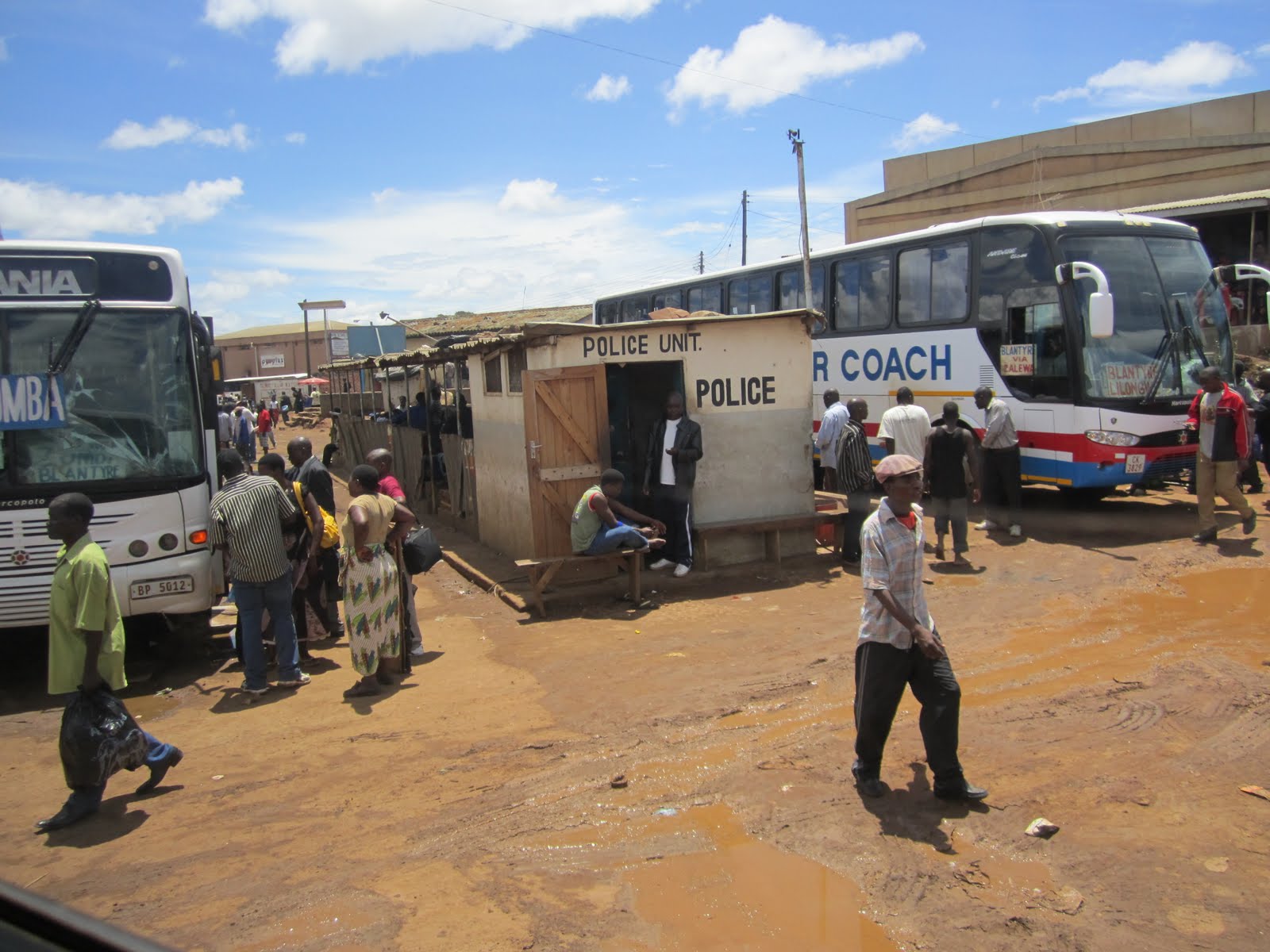


We get on the bus. There are 4 or 5 other people who have already boarded, meaning we’ll be waiting for a long, long time. 2 hours, in fact, sitting in the worst bus station/market I’ve come across in my travels. By the time we leave, it’s 2pm, I’m crammed into a window seat with a 200 hundred pounder nestled in next to me, and the sun is at its peak intensity, sending its piercing heat onto my side of the bus. I put in my iPod and try to forget where I am.

It’s really no use. Every fifteen minutes we stop to pick people up and let people off. Each stop has an army of street hawkers, 20-30 strong, that swarm the bus selling everything imaginable, screaming their prices and products. Potatoes, tomatoes, onions, water, soda, peanuts, bags of French fries, cabbage, cookies, cell phone air time, fried chicken, eggs, raw chicken. The stops are about five minutes in length, enough time to thoroughly bake in the sun and for my fellow passengers to buy all the shit that the street hawkers are trying to push through each window. An hour into my trip, the woman in front of me buys a plastic bag of potatoes which are shoved through my window. The bag is too small for the potatoes and at least 10 of them fall into my lap. I begrudgingly gather them and hand them to the woman, disgusted that anyone would buy any of this crap. She rewards my good deed by buying a small bag of strongly smelling onions, adding a new note to the bus’ current cologne which as best as I can tell is two parts halitosis and one part decaying organic matter marinated in stagnant swamp water. The only saving grace is that I know that this portion of the highway forms the border between Malawi and Mozambique and the views into Mozambique are a nice diversion from the otherwise horrifying trip.


We reach Blantyre at 7pm, five hours after the bus started the trip and seven hours after we arrived at the Lilongwe station. In tourism brochures, Malawi is described as “The Warm Heart of Africa,” and after this trip I can agree with the warm part. I’ve got a sweat drenched tshirt to prove it. I think, however, that I might have trouble finding the heart. The man that first convinced us onto this nightmarish bus is as close to a heartless man as I’ve ever met. No one with a beating heart would wish that trip on another fellow human. I get to the hotel and take a shower, scrubbing myself with soap three times before losing the soiled and violated feeling I’ve had since noon. I hope for a better day tomorrow.

Tuesday, March 22, 2011

Week in Malawi: Part Two

Monday, March 14th

I wake up around 7am and on my way downstairs for breakfast I notice that Lilongwe has somewhat awakened as well. There are people and cars moving about on the street outside the hotel, a big change from Sunday’s laziness, but it still pales in comparison to Lusaka and Nairobi.


I’ve been paying about $50-60/night at the hotels and this price includes a breakfast. Kiboko Town Hotel is no different, so I start my day with a bowl of cereal, fruit salad, orange juice, toast, two eggs, and coffee. My boss is getting in from Nairobi around noon, so I have a few hours and decide to venture out into Old Town.

Just outside the hotel, there’s a paved lot on the right hand side of the intersection where a craft market has sprung up. There are roughly 100 or so “stalls” where merchants are selling wood carvings, paintings, and a bunch of other souvenirs that I’ve noticed in all the African cities I’ve visited. I guess if you’re just visiting Malawi or just visiting Zambia you might buy a wood carving thinking its design is unique to that country. It’s not. I walk by the market and am approached by no less than three guys all greeting me with “Hello, friend, how are you? Where are you from?” I amuse them at first, but by the time the third guy comes to me and says “Hello, friend,” I’m annoyed enough to have a strong desire to reply, “First of all, I’m not your friend. ‘Hello, stranger,’ would be more accurate and second, I’m not interested in anything you’re selling.” They are all selling the same things and seem to use the same strategy. They show me some carvings. I’m not interested. They show me some paintings. I’m not interested. Okay, maybe something small, just a small souvenir for someone back home. I carve these key chains. You can tell me the name of the person, I’ll make a special one for him or her. No thank you. It makes me angry that they're all selling the same things. I want to ask each one how they differentiate from their competition. What’s your marketing strategy?

I make it across the street and away from the market. There are two large shopping plazas that look like they’d be at home in suburban US. I wander around each. There are several currency exchange bureaus, a few travel agents, a grocery store, two office supply stores, and a few clothing shops. I go into Game, a South African chain store that is similar to Wal-Mart, although much smaller. I walk the aisles and find the store to be well laid out with pretty good products. It wouldn’t be out of place in the US which is weird because it’s directly across the street from an informal market where hawkers sell goods from the muddy ground.

I get back to the hotel just in time to meet my boss who will be here for a week to introduce me to the distributors and NGOs we work with in Malawi. We have lunch at the hotel and then walk across the street to one of our distributors.

In Zambia the private distributors we sell to were much bigger companies than I expected. Two of them have agriculture/farming/hardware stores throughout the country and a large sales force that works in the more remote areas. In one case, the sales force alone totals 900 people. The other distributor has just one shop in Lusaka, but this shop has a huge showroom and warehouse. They sell mostly to large scale commercial farms and have everything you might expect: huge tractors, irrigation systems, and farming machines that are impressive in size even if I have no idea what they do. The biggest distributor we work with generates $10million/year in revenue, a far cry from the mom and pop shops I was envisioning (though even the largest distributor’s stores in the towns feel like mom and pop operations). The distributor we meet with in Lilongwe is much closer to what I had anticipated.

You wouldn’t even notice it was a store if you hadn’t already known. The name of the shop is painted above the door but it could use a touch up. Most of the letters are peeling away and the royal blue paint is deeply faded. When you enter the store, there’s a blue irrigation pump to your right, a hallway in the back right corner, and an office directly in front of the door. It’s a large rectangular room with nothing on the unpainted cement walls and a small wooden school desk in the middle of the room. It feels more like a classroom than a store. There aren’t any products displayed save for a large piece of cardboard that rests against the back wall, next to the desk, with little baggies of seed and fertilizer stapled to it in rows. The cardboard seed display looks like a 4th grade science fair project. We meet the two main guys that run the store and sit down in an office.

My project is to try to develop some sort of system for tracking the pumps we sell to distributors all the way to the farmers they are selling the pumps to, so I’m here in Malawi meeting with the distributors to find out what customer information they capture when they sell a pump. In Zambia, most of the distributors are big enough to use a fairly sophisticated computer system to track sales, inventory, and customers, making my job a little easier. I don’t have to ask too many questions of this distributor before figuring out that it’s going to be much more difficult here. All sales are tracked with paper receipt books, and from the look of this guy’s office, I don’t hold out much hope that all receipts and invoices are organized in any reasonable manner.


Even so, we get some good information and plan on coming back tomorrow morning so that they can pass along some additional data. My boss and I return to the hotel and have an hour to catch up with some emails before dinner. Kiboko Town Hotel has a nice second floor sitting area with a relaxing bar and a comfortable environment. I sip a Malawian beer called Kuche Kuche and while firing off a few emails, listen to the bartender’s soundtrack. KC and Jo-Jo, Eminem, and R.Kelly. Who can argue with that?

Week in Malawi: Part One

Sunday, March 13th

I’ve been in the Lusaka Hotel for the past two weeks. It describes its vision as “to restore the hotel to be the leading city centre hotel in Lusaka.” This statement is prominently written on the service directory that sits on the desk in my room, a dimly lit, pink painted rectangle with a rather lumpy twin bed and a mosquito net that once upon a time, before being covered in dust and dirt, was probably white. I keep reading it while I brush my teeth each night and after three days at the hotel, I put the service directory in the corner, flipped upside down so that I don’t have to continue reading the “vision.” It depresses me. The hotel is a long way from leading anything, and I consider telling the staff that a good place to start on their long journey to become a leading hotel would be to install a real shower. As it stands, I’ve been “showering” each morning by squatting down in a pink tub and holding a stupid hose above my head.


For all its shortcomings though, the hotel has been an alright place to spend the last two weeks while working in Lusaka. It’s a good location for business downtown, and the staff is exceptionally nice and most, at this point, greet me by name. Amon, one of the servers in the hotel restaurant where I’ve had breakfast each morning, knows it’s my last morning. When he brings the bill over, he wishes me a good journey, tells me to friend him on Facebook, and says, “I’ll miss you, David” which is actually kind of cute despite it coming from a 28 year old man.

All the taxi drivers outside of the hotel know me as well. I’ve scattered my business around through the two weeks, picking up rides here and there with a number of different drivers. Throughout the two weeks, they’ve all been vying for my eventual trip to the airport since they can make a better amount on the long trip than the short trips I’ve been making around town. I’ve decided to go with Richard who is about my age, exceptionally skinny, listens to decent music, and offers something none of the other drivers can: a twin brother. We’ve enjoyed this common characteristic the last two weeks, and this morning, he’s waiting for me outside the hotel. We leave for the airport around 9am.

The flight to Lilongwe, Malawi is about 2 hours, an easy trip on Kenya Airways. I get to Lilongwe around noon. Customs is very easy, not even requiring a visa, and I manage to change some American Dollars into Malawi Kwacha before grabbing a taxi into the city’s Old Town where I’ll be staying at the Kiboko Town Hotel. During the ride into the city I notice that the road feels more rural than urban. There are none of the giant billboards advertising cell phone networks, Coke, and Samgsung, that dot the highways into Nairobi and Lusaka. Instead the road offers giant rolling hills of corn and mountains in the distance, all of which make a really pretty drive into town. After a twenty minute drive, the driver says that we’ve entered Old Town, and I almost respond by asking “where?” There’s nothing really around besides a medium sized shopping complex and two or three banks. With little traffic and very few people out in the streets, a striking contrast from the crazy streets of Lusaka, Lilongwe strikes me as a very sleepy, small town rather than a capital city.

After checking into the hotel, I take off on foot to find some lunch and mostly find that everything is closed. I end up finding a place about a five minute walk from my hotel and after eating, I return to my hotel to do what everyone else seems to be doing on this lazy Sunday. Lilongwe has greeted me with a giant yawn, so I waste the afternoon with a long nap.

Week in Malawi

I've been out of Nairobi for the past three weeks, spending two weeks in Zambia and this past week in Malawi as part of the project I'm working on. It's been a great trip so far. I've seen a lot and definitely learned a lot to help with my project. The next few posts will be a summary of what's been going on during this past week. Where I've been, the work I'm doing, and the country I'm visiting. A Week in Malawi in several posts...

Wednesday, March 16, 2011

Dolla's In My Pocket

Okay, so they aren't dollars, they're Malawian Kwacha and there are roughly 150 Kwacha in every dollar. But when you're strutting around with a gangsta roll like this in your pocket you still feel like the shit.

Saturday, March 12, 2011

Lusaka View From Above

After a long and miserably humid day yesterday, my coworker and I went looking for a bar to start the weekend with Zambia's thoroughly mediocre beer, Mosi. Just down the street from my hotel there's a 12 story Soviet style looking building that reportedly had a bar on top, so we walked on over and rode the elevator up to the 12th floor. Exiting the elevator, after a nearly five minute ride which felt less safe than I would have liked, we found ourselves at the entrance to the studios of Radio Phoenix, a local radio station on 89.5. We asked the older guy "guarding" the entrance if there was a bar somewhere. He mumbled something and either didn't hear us properly or was just dangerously indifferent to his job, sitting there as we ignored him and started climbing the stairs we found next to the elevator.

The stairs didn't go to a bar, they just went right up to the unprotected roof that we explored without anyone caring. And though we didn't get the beer we were looking for, we got some cool views and pictures of Lusaka.


Cairo Road, Lusaka's main drag, has a tree-lined pedestrian boulevard that cuts through the middle of the wide, always busy street. I've found the pedestrian walk to be one of the nicest features of downtown, which otherwise leaves a lot to be desired. My hotel is the red roofed small building in the middle of the picture, just beyond the second tallest building on the left hand side. I only wish it were as nice as a Red Roofed Inn in the states.


One of Lusaka's many confusing roundabouts clearly shows the Friday afternoon rush hour, complete with the blue minibuses you find throughout the city.

Thursday, March 10, 2011

Mosi-a-tunya

Read any travel guide about Victoria Falls and it will say something like “you WILL get wet,” which would have been a nice warning to heed before I set out for the falls dressed in jeans, tennis shoes, and carrying a backpack with a laptop, a Kindle, and an iPod. I was in Livingstone, Zambia, after a 7 hour bus ride from Lusaka, Zambia’s capital and where I had just finished up my first week in the country. Besides knowing that you had to get to Livingstone to see the falls and that the park entrance would run $20, I didn’t know what to expect, what to see or do, or, most crucially, what to wear when going to the falls.

The hotel told me I could take a taxi or bus to the falls, and I elected for the bus which departed from a chaotic mud filled market about five minutes away from the hotel. Bruno, a guy about my age with a severe gap between his two front teeth, walked me to the market while aggressively trying to sell me the poorly made knickknacks he kept pulling out of the deep pockets of his baggy jean shorts. When I wasn’t interested in buying anything he suggested that we trade my Detroit Tigers hat for a crudely carved wooden elephant. No thanks. As we approached the market and waiting buses, he was desperate. How about your socks? I declined though had I known what waited at the falls, I likely would have taken him up on the offer. Anything to rid myself of the poorly chosen and ill suited outfit I was wearing.

The bus trip was about 10 minutes out of town and by the time we reached the bus’ final destination I had gained another friend, Taurai, a Zimbabwean on his way home from his field work just outside Livingstone. I’m glad he was there because there was no clear indication where to go to get to the falls. As far as I could tell, we were at the end of a small road with nothing but surrounding forest. He guided me from the bus to the park and during the five minute walk, he convinced me that the falls were better seen from the Zimbabwean side, so I followed him to the border crossing which sat just 50 yards from the Zambian park entrance. Unfortunately, my Zambian visa was only single entry and not wanting to pay for an additional visa upon my return, I chose to bid Taurai farewell (he was headed to his home which was just a few kilometers beyond the border), and returned to the Zambian entrance to the falls. Thanking him for helping me get to the park, Taurai did what anyone might do with a new found acquaintance: “I’ll friend you on Facebook. Are you on Twitter?”

The Zambian park entrance was nicely marked and after walking down a small paved road, past a number of souvenir shacks each with two to three beckoning hawkers, I got to the gate and was charged the $20 entrance fee. I read on my ticket after getting back to the hotel that park guests were not advised to pay any unofficial guides within the park, but since I didn’t read this upon entering the park, I did exactly that, “hiring” Joe because I didn’t know where to go and more importantly because he was wearing a royal blue Henry Ford Health System t-shirt.


Turns out, you really don’t need a guide. The park is pretty small and the walk-able paths are all very clearly defined. Joe led me down each and every path, something I could have done very easily alone, and really didn’t offer much more than what you’d read in a guide book: with width of 1.7 kilometers and a height of 108 meters, Victoria Falls is considered the largest sheet of falling water in the world. It’s traditional name, Mosi-a-tunya, means “the smoke that thunders.”

He, of course, also offered the novelty of being led through the park, gazing at one of the Seven Natural Wonders of the World, by a Zambian man wearing a t-shirt whose first owner was a fellow Michigander. It wasn’t hard to convince myself that I had run into Joe’s t-shirt before, that its previous owner worked at a GM plant and shopped at Meijer. This little slice of home, stumbled upon just yards away from Victoria Falls, was well worth Joe’s tour charge of $15.

The falls themselves were awesome in the most traditional sense: extremely impressive and daunting, inspiring great admiration and fear. To describe them much further would be an injustice. Pictures too, as they often are, are underwhelming compared to experiencing it in person. Even when you end up leaving the park wearing jeans that may as well have just gotten out of the washing machine, shoes that won’t dry for two days, a water logged passport, a ruined leather wallet, and a firmer belief in God after finding your laptop, Kindle, iPod, and camera safely dry, shielded from the “smoke that thunders” by a trusty backpack worn underneath a fairly weak rain coat.


If you go, wear a swimsuit and flip flops and pack a poncho. Bruno may or may not be able to be found near the Jollyboys Hotel, though he’ll likely find you first. You can friend Taurai here, and feel free to hire any unofficial guide wearing a tshirt from home. Leave your electronics at home and it’s probably better to read a guide book first. Enjoy.

Wednesday, March 09, 2011

We Intend 2 Cauze

Found this bus ticket shack on my way to Livinstone, Zambia. I wish I had chosen to ride Shalom Bus.

We Intend 2 Cauze:


Shalom Bus Services We Love All:

Wednesday, February 23, 2011

Kenyan Construction Methods

On my way into work I pass several buildings that are under construction. I've mentioned before that the construction sites I've seen in Nairobi always have many more workers than I'm accustomed to seeing on construction sites in the States. For the most part, machines haven't replaced men. Today, I noticed a vertical assembly line of workers passing up rebar to the top floor of this office building. It has to get up there somehow. And I'm no expert, but I think I could come up with no less than 50 OSHA violations.

Wednesday, February 16, 2011

Unorganized Thoughts After One Month

• I’ve seen two H3 Hummers in my first month here. I still can’t decide where the car is more out of place – Africa or Metro Detroit suburbs. The 4x4 capabilities obviously suits Africa quite well but the price tag is a little more appropriate for suburban US.

• The grocery store where I’ve been shopping is nicer than any Jewel-Osco Chicago. I’m not joking. I was initially really, really shocked that this store, stocked with just about everything you can find in the States, existed in Africa, but now I’m beginning to feel a bit shocked at my initial shock. Why wouldn’t a fully stocked grocery store exist in a city that houses plenty of foreign embassies, Africa’s UN headquarters, a sizeable middle class, and is the largest city between Cairo and Johannesburg? My answer to that a few weeks ago would have probably been very similar to a lot of people’s answer, something along the lines of “because Africa is a continent of disease, famine, war, corruption, and violent crime.” I’m happy to be learning differently...and grocery shopping here:


• On my walk to work or home, I routinely see two or three men in pretty standard work clothes just running down the street. There are never any busses within eye sight that they might be running to, they don’t appear to be being chased, and no one else seems to pay any mind to them. They’re just jogging...in slacks, a tucked in button down, and dress shoes. I can’t figure this out.

• In my first few weeks I kept feeling like I was accidently running into people. I’d be walking into work about to cross paths with someone walking the other way and I’d shift to pass them on my right just like I would normally in the States. Unfortunately, the other person would also try to go that way and we’d end up dancing for a panicked second before stumbling around eachother and continuing on. Cars drive on the left hand side of the road here, so I spent the last few weeks determined to always try to shift to my left (it’s not easy) when I’m about to cross paths with someone. It hasn’t seemed to improve things much. I’m beginning to conclude that Nairobi’s rules for walking are similar to the city’s rules for driving. Anything goes. You can pass on the left or right and should not take into consideration the actions of anyone else on the road. I now just walk in the most convenient path and avoid eye contact with anyone walking in the other direction. They can shift and pass me on whatever side they please. This seems to be working much more effectively, and I think I might be ready to graduate to a seat behind a steering wheel.

• I have yet to visit a restaurant where the number of customers outnumbers the number of employees. This is less about the number of customers, which is normally not an insignificant amount, and more about the number of employees. It has seemed in some cases that there has been a separate employee to take our drink order, take our food order, deliver our drinks, deliver our food, bus our table, present the bill, pick up our bill, deliver change. There are at least two security guards at the entrance and sometimes a parking lot attendant to help you park.

• For anyone having some trouble, I know a guy:

Zambia is Burning

I'm heading to Zambia at the end of the month to meet with the NGOs and private distributors that sell our pumps. Admittedly, I know very, very little about the country besides the name of its captial city, Lusaka, and that the northern city of Mununga, as written about in Josh Swiller's Peace Corps memoir The Unheard, is frightening. I now also know, after reading about one couple's Zambian honeymoon, that the country is burning, a result of climate change that is causing drought and desertification in sub-Saharan Africa.

You won't find me on any roads at night, but during the daylight hours of my trip, I'm looking forward to learning more about the country and witnessing firsthand how our pumps are being distributed and used. I hope to return to Kenya with words other than "frightening" and "burning" to describe my visit.

Monday, February 14, 2011

New Pictures

Not many from Kenya, but I just added to my Flickr page a few new pictures, including shots from the Carr wedding. My favorite?

Bone Crusher:

Friday, February 11, 2011

Year of Mobile

For last six months of 2010, working in the online advertising world, I couldn’t get through a meeting without talking about mobile phones. What is our mobile strategy? How do we get started with mobile? How big is mobile? How is mobile different than search? Do you have clients that have retail apps? The questions came from clients trying to keep up with consumers who were more and more likely to be using their mobile phones to browse the web. I sat through two or three presentations from publishers that predicted, based on the current adoption rates of smart phones, that searches done on mobile phones would surpass searches done on computers within two years. The presentations and articles passed around all predicted “2011: The Year of Mobile” and our clients’ questions and sentiments seemed to agree.

Now I’m in Kenya working for a non-profit that sells foot powered irrigation pumps to rural, subsistence farmers. In this world, seemingly far removed from mobile advertising strategy and mobile apps, I’ve found that I still can’t get through many meetings without talking about mobile. The prediction of 2011 being the year of mobile might be correct even here, albeit in a much different way than it was explained in the presentations catered to US advertising.

This Economist article (thanks, Simon) gives a number of examples of how mobile phones are becoming a lot more than just devices to make calls. M-Pesa, which is described in the article, is plastered all over Nairobi on billboards and painted cement walls. In a country where over 60% of the population doesn’t have a bank account, the text based banking has opened up new opportunities for those that traditionally fell outside of the formal banking sector. My organization is currently running a program where farmers can put a pump on layaway, making payments through M-Pesa when they have money available, which will open up our market to farmers that find it hard to come up with the initial investment. There are ideas to start a mobile social network of farmers that will allow them to text a question to the larger group and get answers quickly sent back, making it possible to share information that hasn’t easily been available in the past. What’s the market price for my crop? How do I rotate my crops for better yield? What’s the best irrigation hose?

Last weekend I went on a trip outside of Nairobi with 10 other Americans working and living in Nairobi. 4 of them are directly working on mobile software, creating programs that will help organizations and businesses manage the data that is being gathered through M-Pesa, for example, and building out new services such as text based surveys. For my project, we’re talking to a company that allows you to develop surveys that are done via text message. If the owner of a new pump texts “survey” we can send him/her a series of questions that will help us gather key demographic information, know where our pumps are being used, and ultimately measure our pumps’ impact on farmer income. For the farmers’ time and willingness, we could offer a guarantee of the pump or reward them with cell phone air time. And we could do all of this from the comfort of a Nairobi office, sipping on Kenyan tea while data pours in from cell phones in over 25 different countries.

I noticed this article on Simon’s reading list this week. The title, “Why the Web is Useless in Developing Countries,” is over the top and I found the article’s argument a little weak. A simple phone call to President Mubarek, who just watched his government topple amid protests largely motivated through social media, would probably work in convincing even the biggest cynic that the internet’s power is great. But, after working in Africa for just over a month and witnessing firsthand the exciting development of new mobile uses and tools, I’d have to agree that mobile phones offer a much larger and more immediate opportunity to change and improve the lives of those living in developing countries. Especially in 2011 – the year of mobile.

Thursday, February 03, 2011

First Kenyan Field Trip

James picked me up at my apartment 20 minutes after scheduled. He was driving a minbus and I hopped up front into the seat on the left hand side feeling disoriented riding shotgun on the wrong side of the car. We made the very short trip to the office, parked and rode the elevator up to the sixth floor where we were picking up another co-worker, Anne, and then heading out of Nairobi to visit two farmers. Anne wasn’t in the office when we arrived, so we waited and when we finally headed out we were an hour and a half later than originally planned.

James is in his forties, very quick to smile, and from what I can tell has a favourite word. Happy. “I’m very happy to see you, David, and very happy to spending the day with you,” was his greeting and he riddled every other sentence with the word; so much so, it was hard not to return his smiles and yes, be happy. Anne is younger, late twenties or early thirties, with very short hair and thin frame glasses. She sits in the first bench of seats behind the front of the bus and her somewhat quiet voice is hard to hear over the noise of the road as we make our way out of Nairobi.

When you first get to Nairobi, one of the first things you’ll learn is that traffic is bad. Everyone you meet likes to warn you of the rush hour traffic jams and tell you that he wakes up an hour or two earlier so that his commute is 30 minutes rather than the 2 hours it would take in traffic. Judging by my short walk from my apartment to the office, I believe them. The smaller streets that take me to the office are gridlocked with cars, motorcycles, buses, bikes, and people. There are no traffic lights or followed stop signs at intersections, so they quickly become a snarled mess of vehicles inching into to the middle, playing chicken with their counterparts, until they can make their required turn. Pedestrians aren’t given an inch in any of this, so we’re left doing the same, inching out, playing chicken, until we can somewhat safely cross the street. And if I’ve learned anything so far it is that the little old Indian lady driving her BMW, who you think might give you a pleasant wave of her hand to safely let you cross does not. She does not lose a game of chicken.

James weaves through the city streets, through the snarled intersections and equally confusing roundabouts. The mini bus we’re driving has a flat face with no hood so everything is right outside the windshield and the cars in front always look dangerously close. After 10 minutes of city driving we turn onto what James describes as a super highway. It looks like an unorganized and dangerous construction site. There are people everywhere, some walking, some working, others just watching. With cheap labor, an unemployment rate of 40%, and not much capital to invest in Caterpillar machines, Kenya has replaced the backhoes, concrete mixers, and pavers of a US road crew with human workers. Hundreds of them peppering what will become some sort of “super highway.” The road goes from a very reddish dirt to paved, paved to dirt, from two lanes to three and then to one and back to two. But the traffic is moving in our direction, out of town, unlike the cars stopped on the other side trying to get into the city. Between the people, traffic, construction, and changing grades of road I find myself not sure where to look or what to focus on.

Anne points towards the green mountains in the distance and says that’s where we’re headed. Before we get there, we pass through two or three towns. I notice a surprising number of places advertising car washes and every other cement building seems to be a beauty parlor. I point the later out to Anne who finds it a lot funnier than I intended it to be. Again, people all over line the streets. We pass two markets of tightly lined up wooden shacks or tin roofed structures in dirt lots, with most of the shacks selling vegetables. The markets seem to be the center of activity with people and rickshaws weaving in and out of the road. At one point while driving up a hill, there’s a man pushing a wooden rickshaw in the opposite direction, down the hill. The rickshaw is loaded with something I can’t make out but based on his speed, the weight of his goods give him significant momentum. He is barrelling down the hill, putting a foot down to lift the rickshaw up and then riding airborne for 30 feet until he puts the other foot down and launches himself again. He speeds by us hanging on to the rickshaw, his feet dangling 5 feet off the ground. Amazed by his speed and recklessness I let out an unintentional “woah!” Laughing, James jokingly asks if I’ve seen anything like that in the states. None of us can quite figure out how the daredevil plans to stop the rickshaw.

We finally get out to the mountains and turn off the road onto a one lane dirt road that heads down a steep hill and park the bus 400-500 yards down the hill. The trip out of Nairobi seemed like an endless string of crude apartment buildings, shops, restaurants, and people, but we park the bus in a very quiet, rural area surrounded by large green hills. The path we walk down winds through small farm plots and James points out the different vegetables. Cabbage and spinach take the title of most popular. We come to a steep drop and below see a clearing. It’s a small farm set right up against a creek. There’s a hose with one end in the creek and the other end attached to a blue pump which looks like a small stair stepper exercise machine. A farmer is leaning on a narrow piece of steel that rises up from the pump as a means of support while he pumps his legs up and down. His stair stepper motion pulls water out of the creek, through the hose, through the pump, and through a hose connected to the other side of the pump. This hose extends 20 or so feet into his plot where his son uses the water pumping out of the end of the hose to water the crops. The pumps blue paint stands out the brightest in the field. It looks a little out of place and the power with which the water exits the one end of the hose is surprising.

We talk to the farmer while he’s working, pumping up and down on the foot pedals. He’s barefoot and is wearing a tattered golf shirt that swallows his wiry frame. He’s broken a good sweat and explains that he does this 6 hours a day, that since he bought the pump he’s doubled the size of his land and has starting building a new house. He has five kids, one of whom is only 3 months old and is described, with a smile, as a mistake. The rest of his kids are older and he says that he’s been able to afford their schooling with the income from the larger farm. The pump waters his crops more efficiently than what he had to do before which was stick a bucket into the creek, fill it, and then carry it and finally dump it over his crops. He did this 6 hours a day, the same amount of time he works with the pump, but was only able to cultivate a piece of land that was barely sufficient to keep food on the table, let alone pay for school fees. Because the pump waters the crops more quickly, he can water and tend a larger area of land, allowing him to earn more than what he ever would have aspired to with a simple bucket in his hand. He explains all this, sweating and pumping in the hot sun, with a palpable enjoyment and satisfaction.

We move on to another farmer that is nearby and hear a similar heart warming and meaningful story. This farmer is a woman and with the help of the blue pump has found even more success than the first farmer. She’s used it for close to two years and now half of her farm, which has grown significantly since she started, is for vegetables that she sells to a large food manufacturing company. The profits from her six hour days support her family of six. She says she has a lot of people asking to borrow the pump but never lets them, “They can buy their own pump.” A hard worker with a competitive spirit, I think. It’s no wonder she’s made a good entrepreneur.

We trek back through the fields and take off in the bus. James is very, very happy I was able to see the pumps in action. I agree and also note how nice it was to see parts of the country outside of Nairobi. We make our way back into the city using a different route that actually feels remarkably similar to how we left the city. People, car washes, beauty parlors, markets, and rickshaws line the road. Traffic is dense, construction is everywhere. We get back to the office, our field trip finished.

I head to my desk and open an Excel spreadsheet. Rows of numbers stare back at me from the screen, accounting for pumps sold, shipped, and delivered. In the past, Excel spreadsheets have mocked me for the countless hours I’ve spent calculating and formatting numbers and data points that seem worthless and hollow. But today, I win. These numbers represent blue pumps, new entrepreneurs, and school fees. These numbers have meaning.

Monday, January 31, 2011

Lazy Afternoon

A security guard catches a snooze and some shade.

Thursday, January 27, 2011

Peace Corps, Expat Aid Workers

These gems were just passed along to me by two different friends. The first one needs no comment.


The second is a blog similar to Stuff White People Like but it's focused on expat aid workers. I found myself laughing and cringing, sometimes at the same time, while reading through. I've been guilty of a lot of it. Take, for example, the start of number four on Drivers which is eerily close to my description of arriving in Nairobi:
Upon arriving at the airport in a new country after a long flight, followed by the entanglement that is immigration, luggage retrieval, and customs, you stumble sweaty and bleary-eyed into the arrival pen. You scan the sea of unfamiliar faces, desperately hoping to see a sheet of A4 with your name on it. There it is! You make eye contact, nod and smile. And as you hand your whole being over to that other human, you can relax: You’re with the driver now.
I also liked number 14 on hot showers (the shower head in my bathroom is a "suicide shower") and this tidbit from Establishing Field Cred:
You can also drop hints that you’ve got field cred by always pronouncing the names of cities and countries the way a local would (eg., Nee-ka-ra-wa instead of Nik-uh-rah-gwa).
In the Peace Corps, I had a pretty good idea of whether or not I'd like you based on how you pronounced Nicaragua. Trying to establish field cred, in this case, wasn't going to get you very far.

Note: I've learned in my few short weeks in Nairobi that serving in the Peace Corps immediately gives you a deep reservoir of field cred in the eyes of non PC expat aid workers.

Monday, January 24, 2011

My New Digs

You'll be surprised that my apartment building looks like this:


And that I cook in a kitchen like this:


To entertain my guests here:


Before resting my head here:

Saturday, January 22, 2011

Trip Over

Because leaving Chicago involved a move out of my apartment before the holidays, a trip to Phoenix for Christmas, a trip to Puerto Rico from Phoenix for New Years and finally back to Chicago for four days before my departure to Nairobi, my packing was done haphazardly and left me lugging a 60lb suitcase, a 50lb duffel, and a full backpack to O’Hare. The ticket agent at British Airways charged me $50 for the heavy suitcase but then promptly upgraded my trip to London to business class. $50 well spent, I thought. I settled into my window seat’s spacious digs next to a 70 year old woman also on her way to Nairobi for an African safari. Of course I didn’t actually talk to her or ask her where she was headed but judging by her smart hiking boots, her husband’s (who sat right across the aisle) breathable khaki button down, and a Frommer’s Kenya book I pegged her pretty quickly. I even heard her practicing Swahili under her breath. “Oh, it says here ‘Jambo!’ means hello.”

We were delayed at the gate for almost 2.5 hours but when your total trip is estimated at 18 hours and you have a safe buffer of time for the London connection, delays don’t seem too frustrating. We finally took off around 8pm and through the plane window I kissed Chicago goodbye.

7 or so hours later, we arrived at London Heathrow and my connection was uneventful. I had just enough time in the airport to grab a bottle of water, hit the restroom, and find my gate for the 8 hour flight to Nairobi. Though I didn’t have the business class upgrade on this leg of the journey, I managed to snag an exit row while checking in. Unfortunately, when I boarded the plane I found that my exit row seat didn’t have a window and was the closest row to the bathroom. I appreciated the extra leg room on the long flight, but I tend to put a higher premium on the clouds, stars, waters, mountains, etc. you can stare at from a plane window, so I was disappointed to find my only view would be passengers entering and exiting the john. Thankfully, I put my headphones in and was able to fitfully sleep through most of the flight.

Touching down in Nairobi brought a number of firsts. It was, by a long shot, the farthest I had been from home, and it was my first time on the southern side of the equator and my first time in Africa. I’d like to say that I reflected on this and came to some intelligent conclusion on world travel, but I was preoccupied by the normal logistics of any arrival. We exited the plane and lined up to pass through customs. The Nairobi airport though a bit older and run down in some areas was nicely organized and easy to navigate. Customs was a breeze. I paid for my $25 entry visa and was passed through with little more than a stamp of the passport and a wave of the agent’s hand. I headed downstairs, picked up my two bags from the carousel and headed over to where they had an additional eight agents working to inspect bags. Again, a smile passed me through without bother.

Rolling my bags through a narrow hallway, I entered into a larger lobby. There was a rope ten feet from the entry way with 50-60 people waving placards with names. I had been told that Josef would be waiting for me and sure enough, I spotted my name in the crowd and walked over. Josef must have done this before because as he saw that I was heading his way, his eyes got a little bigger, he called my name, smiled, and when I reached him, shook my hand firmly. “Welcome to Kenya,” he said. I had been a little nervous about the late night arrival to Nairobi and was sure that “meeting a guy at the airport” wasn’t going to work out too smoothly. It felt good, after a long flight and the nerves, to be in what felt like secure hands. Thank you, Josef.

He helped get my bags outside and asked me to wait while he pulled the car around. Our trip into town was about 15 minutes, passing just outside the central business district of Nairobi and into an area called Parklands where a new co-worker waited for my arrival at the corporate apartment. Because it was 11pm, I didn’t get a good view of the city, but upon first glance, Nairobi was much taller than I had imagined. The whole trip into Parklands was lined with buildings above 5 stories and the main downtown area had a legit skyline of buildings, with the tallest, Times Tower, coming in at 38 stories.

We pulled into the apartment building and Josef again helped me with my bags. The apartment was nicer than I had imagined, and my co-worker showed me my private room and bath for the night. I set my stuff down, sat on the bed and looked at my watch. 11:30pm, exactly 24 hours after leaving the Chicago apartment I had safely arrived to the city I would call home for the next nine months. I thought of my safari bound seat mate from my Chicago to London flight and said, under my breath, “Jambo, Nairobi.” I slept soundly through the first night.

Wednesday, January 19, 2011

Blogger/daveande Stats

I've spent a little bit more time than normal within Blogger over the last few days, updating the blog's design and checking out the stats that are now available. I think the stats have been included in Blogger for some time now, but I haven't taken a look until recently. Blogger now provides the number of pageviews your blog has registered over any given time period and breaks out your pageviews by specific post and/or traffic source. What did I find when looking at daveande stats? A couple of funny things.

I nearly own the Google search term "syllabus week" coming in at number two right behind Urban Dictionary. Just this week, college students Googling "syllabus week" or some variation have registered 111 page views on my post about Nicaragua's syllabus week.


The daveande post with the most pageviews since May 2010 is Peace Corps Resume. I wonder how many big hearted, adventure seeking, service oriented people have Googled "Peace Corps resume" in hopes of finding some info on how best to format a resume for the Peace Corps application only to come across my post. "Banged my head against a large concrete wall in frustration, boredom, and craziness once a month for 24 months" may have been the basis for some second thoughts and new career decisions.

Tuesday, January 18, 2011

Arrival

It was a relief to finally board the plane and take off. When I first decided to take the job, I was afraid I wouldn’t have enough time to get everything in order and take care of all the loose ends that come along with dropping a life in Chicago and moving to Kenya. It turns out, though, that I should have been more afraid of having too much time. Too much time to second guess, too much time to worry and wonder. In those moments of doubt there was always a chance to say “I’m not going to do this,” and those thoughts were a stressful burden right up until the last minute. When we finally took off though, the decision was made. There was no going back and the definitiveness felt good after two months of questioning.

But definitiveness is a lot different than excitement and confidence. I was both confident and excited about my decision, but a lot less so than I would have liked to be for such a big commitment. It was easy applying for the job and convincing myself that I’d do anything, even move to Africa, for nine months, but the last month leading up to the actual move was a lot harder than I anticipated. I’ll have plenty of time to sort all that out, but at this point, the decision is made and I’m already into my second week in Nairobi.

So far, so good, although it’s fair to say my expectations were really low since my closet frame of reference was the Peace Corps. Within two days of arriving to Nicaragua, I was dropped off in a small town and expected to live with a family that spoke no English. The mornings started with a bucket bath of icy cold water followed by rice and beans for breakfast. The nights were capped off by crawling through a mosquito net and falling asleep to the unfamiliar sounds of roosters and feral dogs. The first week was more uncomfortable than anything I had imagined. By moving to Kenya, I knew I wasn’t getting myself into something like that again but having gone through that, my first week in Nairobi has been a breeze, complete with pleasant surprises. A king size bed, wireless internet, hot water, a full grocery store, and a 9-5 life not unlike Chicago’s will go a long way in keeping me happy. And it’s infinitely easier to adjust to a new country when you can understand what’s being said to you, especially when during the first week the most repeated phrase from my Kenyan co-workers was “Welcome to Kenya. Welcome to Africa.” Indeed.

Renaissance State of Mind - Version 2

Another version of Empire State of Mind Detroit style. This one has some pretty clever lyrics, especially since it was written by fourth through seventh graders at Detroit Academy of Arts and Sciences. My favorite - "We love our city so don't have a pity."

Empire State of Mind: Detroit Style from frank collins on Vimeo.


You can find the first one here.

Thursday, November 18, 2010

On to Africa

A short video about Kickstart from PBS News Hour.


Saturday, September 25, 2010

Doorknob in Spanish?

I just came across this while visiting the Push for Peace Corps website. Peter Hessler's strong defense of the Peace Corps, in response to Nicholas Kristof's March 2010 critique of the organization while calling for the formation of a Teach for the World initiative, is passionate, funny, and accurate. Give it a read.

I didn't know the word for doorknob in Spanish. There weren't any doorknobs in Palacaguina. Seriously. But if you want to know how to actually communicate like a Nicaraguan, I'm your guy. America would be a wiser country if we had more people who had an intimate understanding of a foreign culture. And that doesn't require knowing the word for doorknob.

Maize 'n Brew Logo

Nice work, Luke!

Sunday, August 29, 2010

Explore Detroit with Johnny Knoxville


I sometimes feel like the stories of Detroit's "empty canvas" are just as ubiquitous as Detroit's blight. Looks like it might be a fun movie though. I'm excited to see Knoxville drive through the Heidelberg Project. Out tomorrow.

Technology and the Peace Corps

NPR's All Things Considered recently aired this short segment on how technology, specifically internet and cellphones, is changing the Peace Corps. No doubt that technology has changed the experience, but I'd be interested in learning what percentage of volunteers have internet/cellphone service in their sites. The availability of both varied greatly throughout Nicaraguan Peace Corps posts, and I imagine this to be the case in other countries.

The piece doesn't contend that the improved availability of internet and cellphones is good or bad, but it does assert that this technology keeps volunteers from integrating into the community, an important goal drilled into the heads of all Peace Corps volunteers. I disagree. For the volunteers that are lucky enough to have easier access to internet, I'm confident that it does not keep them from integrating into the community as much as a volunteer living in a rural village hours away from a phone or computer. If you aren't integrating into the community because you can have a 20 minute call with Mom every morning and an hour or two of internet time at night, you likely wouldn't be putting too much effort into integrating into the community without those crutches. In fact, I wonder if countries or posts with easier access to technology have a lower volunteer attrition rate, improved project results and more successful community integration/learning because volunteers in these sites have just enough contact with support systems at home to stay motivated and confident. Maybe that 20 minute call with Mom and Dad every morning keeps the loneliness, that would otherwise cause a volunteer to quit, just far enough away to keep the volunteer trudging through the two years and onto the successful completion of a project that forges deeper and more meaningful community relationships.

Saturday, May 22, 2010

Survivor Nicaragua

Nicaragua was just selected as the host country for the 21st season of Survivor. The host, Jeff Probst, described the country as the land of “impenetrable terrain, smoking volcanoes and savage wildlife." That's pretty accurate when describing all of Nicaragua, but maybe a little over the top for the show. They're filming in one of the nicest areas of the country.

Should be interesting to see if Land, the documentary film about San Juan del Sur's quick development, gets any more buzz because of the show.

Sunday, May 16, 2010

Happy Birthday, Cristian

I was in Palacaguina on a training visit, a weekend trip designed to give me a chance to visit the town I would live in for the next two years, and was meeting my host family for the first time. I had gone around the room and met just about everyone – Maria, Estela, Angela, Herman, Sergio Luis, Carlos, Erlinda, Carmen, and Emanuel – when Rosa walked up cradling Cristian. I wasn’t really sure what to do when she introduced us. It was hot and we were all crammed into a small concrete front room that offered no breeze. I was overwhelmed with the number of people staring at me and the number of unfamiliar names that had just been thrown my way. I had struggled through each introduction with the Spanish of a three year old, and now I had to come up with a reaction or something to say to a sleeping baby. I asked how old he was. Six weeks. And then I said that he was the first person I had met in Nicaragua that knew less Spanish than I did. I said it more as a truth than a joke, but the whole room shook with laughter. I had only been in the country for six weeks but I had already learned that it wasn’t hard, as a self deprecating foreigner with a thick accent, to get Nicaraguans to laugh, and this proved to be an extremely easy crowd. Cristian had helped me knock my first impression out of the park.

After that first introduction though, we didn’t really bother with each other much. In fact, we got off to a fairly cold start. As far as I could tell, Cristian didn’t do much other than shamelessly breastfeed, making any entrance into the common area a dangerously awkward experience, and steal the hammock from me during his mid morning naps. There was only one time that I held him. His mother was running errands and his grandmother was in the kitchen, so I was left to answer his cries from the hammock, picking him up and tenderly consoling him. He quickly stopped crying and to thank me peed all over the front of my shirt. After that, I stayed away from him for the most part, preferring instead to spend my time with his older brother, Sergio, who offered abilities I found more appealing – jumping, running, playing, walking, talking, joking, laughing.

But Cristian didn’t hold my cold shoulder against me. He grew up quickly and within months was greeting me upon my arrival at the house with a big smile and my name, “’veeed.” When he was learning how to walk, Sergio and I would sit on opposite sides of the room and have Cristian try to walk from one of us to the other, betting candy on how far he’d make it before falling. After he was more sure footed, he’d walk over to me to slap a high five or compete with Sergio for space on my lap. It was fun watching him grow up and by the time he was more safely trained at using the bathroom, he had won me over. By the time I left, I knew I’d miss him just as much as his older brother.

Through my two years living there, Cristian’s family repeated my initial joke about my Spanish at least once a week. Jokes or remotely funny stories had a tendency to be frequently retold among Nicaraguans, and no matter how many times they were shared, they always seemed to earn the same reaction. The one hundredth time something was told was just as funny as the first. It was boring at times, always retelling the same stories and jokes, but the ease with which the laughter came was reassuring. No matter what, laughter was just one old story away.

Last week, Cristian turned four years old. I called him to wish him a happy birthday and we briefly chatted. His responses were mostly “yes’s” and “no’s,” but he did ask me when I was coming to visit and generally spoke very well for a four year old. When he returned the phone to his mom, I told her that his Spanish was now better than mine. Her reaction was predictable – a hearty laugh. I like to imagine that 20 years down the line, I’ll be in Palacaguina for a visit. We’ll all be crammed into the same front room, and I’ll tell Cristian the story of the first time I met him. Without a doubt, he will have heard it before but no matter. It’s comforting knowing that the story will be met with the same reply as that first day. The whole room will shake with laughter.

Happy Birthday, Cristian. May your Spanish always be improving.

Sunday, May 02, 2010

Obama's UM Commencement Address

President Obama using John F. Kennedy's introduction of the US Peace Corps to inspire UM's 2010 grads to willingly contribute part of their lives to the life of our country.


Sunday, April 25, 2010

LAND Trailer

I spent a number of weekends in San Juan del Sur during my two years in Nicaragua, and even within that short time frame, you could very clearly see how quickly the area was changing. Every trip revealed a new development, hotel, or restaurant, and the changing landscape often sparked a lot of discussion among volunteers as to the advantages and disadvantages of it all. I was never really able to settle anything in my head and found that most of time I was equally angry and excited about everything that was changing. Seems like this upcoming movie about the development around Nicaragua's southern Pacific coast doesn't try to settle it either, but simply presents the whole debate, even if the movie is very clearly trying to poke the embers of the fire (the provocative "Bring your Gun" motto seems a bit much as a subtitle). I'm hoping I can find the movie at some point and look forward to the debate.

LAND trailer for feature documentary from Julian T. Pinder on Vimeo.


Tuesday, April 06, 2010

House Hunting - Detroit


I went on a Detroit house hunt a couple weeks ago, armed with twenty addresses I found on realtor.com. I wasn't planning on buying anything just yet, though it's tempting when some of the homes are priced like an inexpensive TV; I just wanted to get a better sense of what I could get for my money. But just a little bit of my money.

The houses I saw were throughout the city and ranged in price from $555 to $10,000. I was hoping I'd walk away with an understanding of differences between the two extremes. Are the houses priced at $10,000 in fairly good shape (that's relative) and in a decent city neighborhood? Are the houses priced at $500 bombed out with no windows, roof, plumbing, etc. in a neighborhood that no longer exists? I wanted to find out.

I didn't. We saw houses with boarded up windows, doors left open to the elements, and crumbling front porches located on streets with only one or two live-able homes left priced at the upper range and houses, from outside appearances, nicely maintained and seemingly live-able in well populated, functioning neighborhoods priced at the low range.

There just wasn't any apparent logic to the prices, which was disappointing given what I wanted to get out of the trip, but it was really cool to spend a lot of time driving through Detroit's residential areas. Driving around and experiencing the extremes of Detroit is all at once depressing, motivating, inspiring, hopeful, and humbling. I hope to get back soon for a second round of hunting with someone who knows more.

Anyone interested in buying a full city block in America's 11th largest city?


Picture from http://guestofaguest.com/sports/po-town-detroits-pontiac-silverdome-sold-for-a-song/


Sunday, March 28, 2010

Want to create an online store?

Last year I started to think about trying to create an online store. I didn't really have a specific product in mind, but I wanted it to be a niche market to avoid a lot of competition, and I wanted it to have a price point of at least $50 to make it more feasible to maintain a margin. That seemed simple enough until I realized that since the eighth grade I've bought every piece of clothing I've owned at The Gap, J.Crew, or Banana Republic. I'm not exactly "niche," and it was a challenge to come up with product that met that criteria. Last spring though, I was thinking about trying worm composting again and came across Nature's Footprint. They offered a drop-ship reseller program, and their product seemed to be the perfect match. I looked into it a little more. The bins were certainly "niche" and the prices/markups were high enough to feasibly make a solid profit on a few sales. All I had to do, it seemed, was become an official reseller, build a site, and market the bins. But any time I spent trying to create the site, I became pretty frustrated with my lack of web development experience. There were some pretty cool tools available to create a fairly nice website but nothing seemed to offer enough to create a real online store.

I played around with Weebly a lot. I had used it in Nicaragua to create the beginnings of a website for our Peace Corps class, La Empresa Creativa, and it was pretty useful to quickly build a functioning site, but their online store features were pretty inadequate. I didn't get very far and ended up just kind of shelving the idea for awhile.

A few months ago though, Simon sent me a link to Jimdo. It works a lot like Weebly but makes it very easy to set up a store. You can set prices, shipping rates, pictures, and product variations all by just dragging and dropping preset site elements from the toolbar. You can then link a PayPal account to your Jimdo account and within 30 minutes have the basics of an online store set up. I was excited and decided to give the worm bins a shot.

I applied and became a reseller, bought a URL for $8 from GoDaddy, had Luke Emeott create a logo, and used Jimdo to build the site. I shelled out $60 to Jimdo to have a little more freedom in the site design, and had it all up and ready within about two weeks. $68, little web development experience, and no product inventory, and the Urban Worm was born. I had created a "business."

I use quotation marks because it's not much of a "business" if it doesn't actually sell anything or if it sells something but doesn't turn a profit. Quite frankly, it'll be hard to do both for some pretty clear reasons I'll get into in an upcoming post. But, for anyone interested in creating an online store, I'd encourage you to check out Jimdo.

Wednesday, March 24, 2010

Urban Worm

Blogs are washed up and slow moving. Or so it seems after launching a new project this week and before having a chance to reveal it here, it was unleashed on Google Buzz and I got quick responses in emails, IMs, and phone calls from roughly 90% of this blog's readership. The digital world, apparently, does not wait. At least not as much as what I had grown accustomed to in Nicaragua where, I learned, there was more time than life.

For those that haven't yet seen it, take a look at my new site The Urban Worm. It's pretty cool what you can create online, mostly for free, with very little actual web development experience.

I'll write a little more about the actual process of creating this and what I plan on testing, but for right now, go to the site and send me your suggestions (new pages, new copy, other products, promotions, blog entries). Better yet, buy a worm bin. $10 spent on AdWords so far hasn't yielded any orders. Be the first!

Sunday, March 14, 2010

Push for Peace Corps

Contact your representative now to encourage the signing of a letter urging $465 million for Peace Corps in FY 2011.

And for those that need to be convinced, I leave it to the authors of my favorite two books about the Peace Corps experience (The Village of Waiting and River Town).

George Packer
:

Peace Corps provides the best return on the dollar in America’s entire foreign policy budget. The program educates thousands of young Americans in each new generation about the reality of life as lived by most of the world’s population.


Peter Hessler:

I was fortunate to attend Princeton and Oxford universities, but the most important part of my education was the two years I spent in the Peace Corps. I learned to teach and communicate with people very different from myself, and I learned Chinese — but the most important lesson was one of perspective. I saw the world differently, and that viewpoint has informed everything I’ve written since. This is true of many former volunteers in many walks of life: teachers, organizers, diplomats. It’s a shame that in a country with such an active foreign policy, relatively little attention and support has been given to the Peace Corps.


Tuesday, March 02, 2010

Peace Corps Week

In honor of the Peace Corps' 49th anniversary and the annual celebration of Peace Corps Week, I'll share with you a short tour of my former house (nicely updated by a current volunteer, Penny) in Pacaguina, Nicaragua. Complete with a shot of the latrine, the chickens, the neighbors, and the concrete washing table.


Saturday, January 30, 2010

UM Peace Corps

UM marks the 50th anniversary of the Peace Corps with this new site.

Wednesday, January 20, 2010

Monday, December 07, 2009

My Old Home

My old abode getting a face lift. Fleas and all. Good luck, Penny.

Thursday, November 19, 2009

Selling Detroit

Check out Time's Assignment Detroit's Selling Detroit project. Pretty cool idea, although I found most of the ads fairly underwhelming. I like Kid Rock's endless ambassadorship for his city but something tells me he's not really the one to attract a bunch of young creative types.

Tuesday, November 17, 2009

Commute

I finish class and walk out to the main road. I wait fifteen minutes before a truck approaches and I extend my thumb. It slows down and I run to catch up to it, jumping on just as it comes to a complete stop. I slip the front half of each foot onto the metal bumper that offers a narrow eight inches from the back of the truck. The heels of my feet dangle off the back but I use both hands to grab onto the frame of the truck and feel secure. I bang my hand against the side of the truck signaling to the driver that I’m ready to feel the wind. We depart.

The truck has a flat bed that extends ten feet from a small two person cab. The frame of the bed is six feet high, solid metal along the lower half and three one foot metal sheets spaced six inches apart surround the upper half. The bed is, unfortunately, filled with a very fine, dry dirt and as the driver shifts into second and third gear, the increasing speed sends the dirt through the cracks and spaces of the bed frame. When we reach a healthy speed, the tires kick up the dust of the parched dirt road and I am completely engulfed by earth. Dust from the road and dirt from the truck is all I breathe, hanging off the back of my hitchhiked ride.

I close my eyes, trying to escape, but the darkness throws off my fragile balance. I look down towards the road and the cloud is less intense but the road dizzying, quickly passing below. There is no respite from the cloud. It throws its dirt into my eyes and forces its dust into my mouth. I decide the best option is to stick my head around the side of the truck where the dirt blowing out of the bed is less intense. I squint my eyes and imagine what the driver sees in his side view mirror. A decapitated head with narrow eyes peeking out from the side of the truck.

I struggle to hold on. Putting my head to the side of the truck makes my grip less secure and my arms are quickly fatigued. I curse myself for sticking my thumb out and accepting the 15 minute ride into town on the back of a large truck filled with dirt. I swear to only hitchhike rides from pickup trucks. To wait longer for the bus. To buy a bike. To walk.

We reach the paved section of the road and the dust subsides. I don’t dare take a hand off the back of the truck to wipe the dust from my eyes which are barely open, still shielding themselves from the truck dirt. As we get closer to the center of town, I hear the familiar cries of “Oye, David!” from those in the street and I blindly return the greeting. The truck stops at the park and lets me off. I wipe my face off with the inside of my shirt and slap my chest, legs, shoulders, and book bag. Giant mushroom clouds emanate from each slap. I walk to the cab of the truck and look the driver in the eye.

-Thanks for the ride.

-Any time.

Sunday, November 08, 2009

MGoBlues

What can explain the struggles of the Wolverines over the past two seasons? The new coach? The decimated defense? The young quarterbacks? All of these are probably contributing factors, but I'm fairly certain that the root cause of our trouble is much more horrifying.

Somehow over the last two seasons UM has gone from pounding our collective chest in superiority once/game:


To hanging our collective head in nerdy shame:


If I can't watch a winning football team, can't I at least watch a winning commercial?

Tuesday, October 20, 2009

Bosshole!

I've been working on this over the past few weeks and after some final tweaking this weekend, I think it's ready to go. I wish I knew more html and web development but this has been a fun experiment to try to learn a few things. And now I just need folks to start submitting.

Take a look, let me know what you think, pass along to friends, share your stories.

www.bossholestories.com


Friday, October 16, 2009

The Big Nic

Vicente Padilla, The Big Nic from Chinandega, is pitching for the Dodgers today in the NLCS. Ha!